1.0.0
Initial commercial release
- addedInitial commercial release
Property marketplace, buyer experience and agent CRM as one real-estate system
Preview only — not yet on sale.
Pro licence · what that covers
What this template is for. Each one is a filter in the catalogue, so the products beside it solve the same problem.
Most property products are two products pretending to be one: a marketing site an agency shows clients, and a CRM the agents actually use. Estate builds both from the same listing model — the public marketplace, the buyer journey from brief to offer, the agent pipeline and the admin workspace — so a price change reaches the shop window and the pipeline at the same moment.
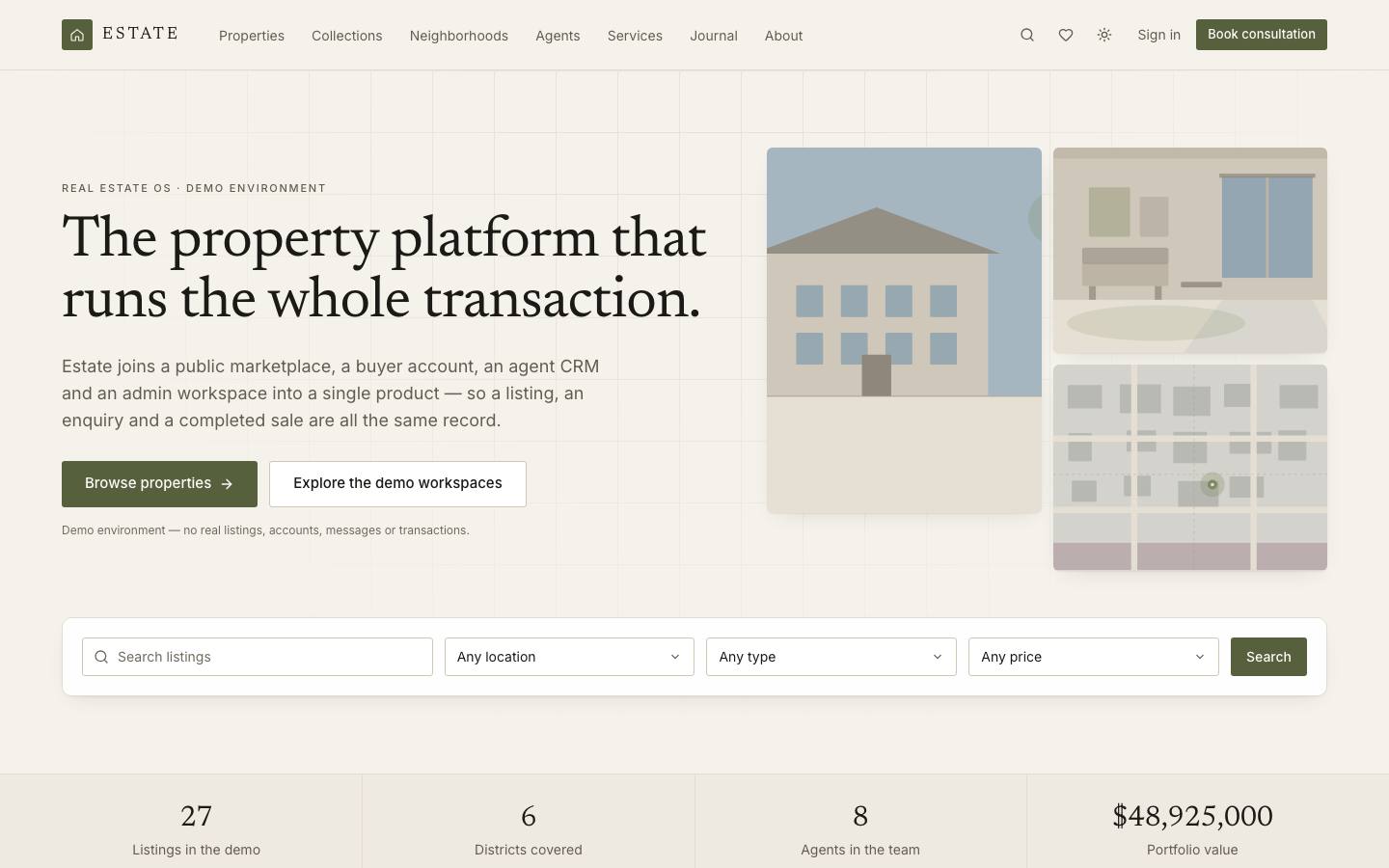
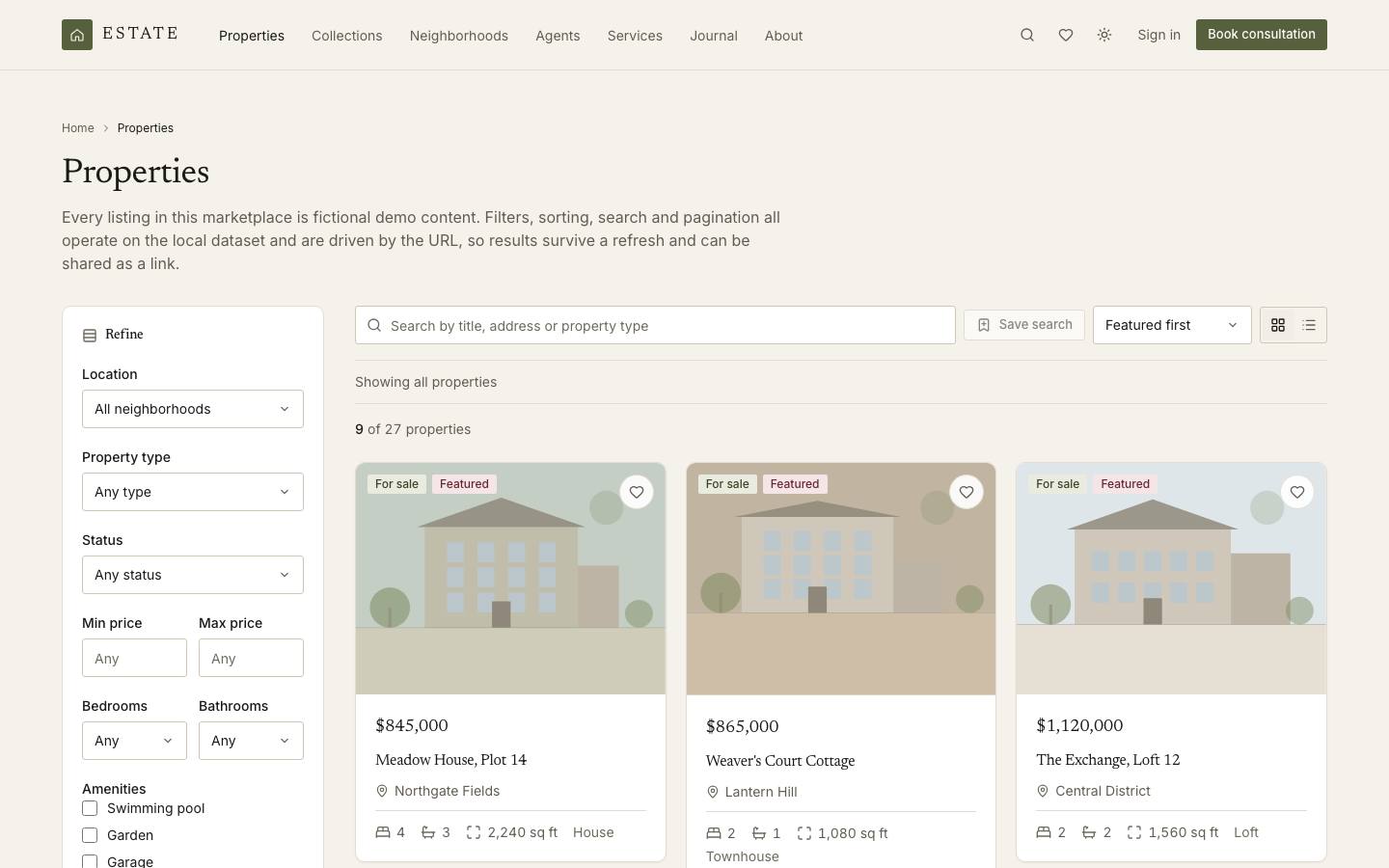
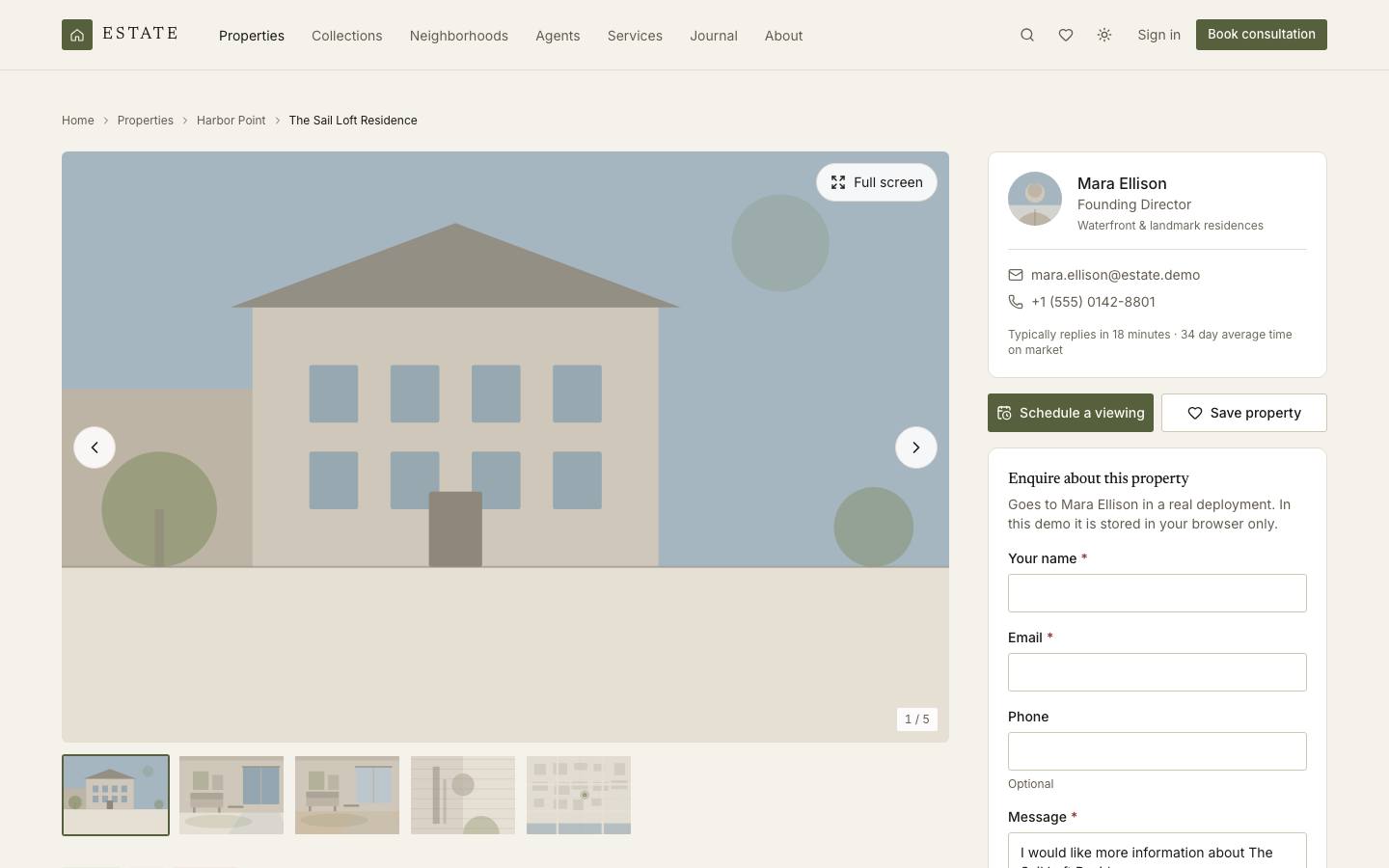
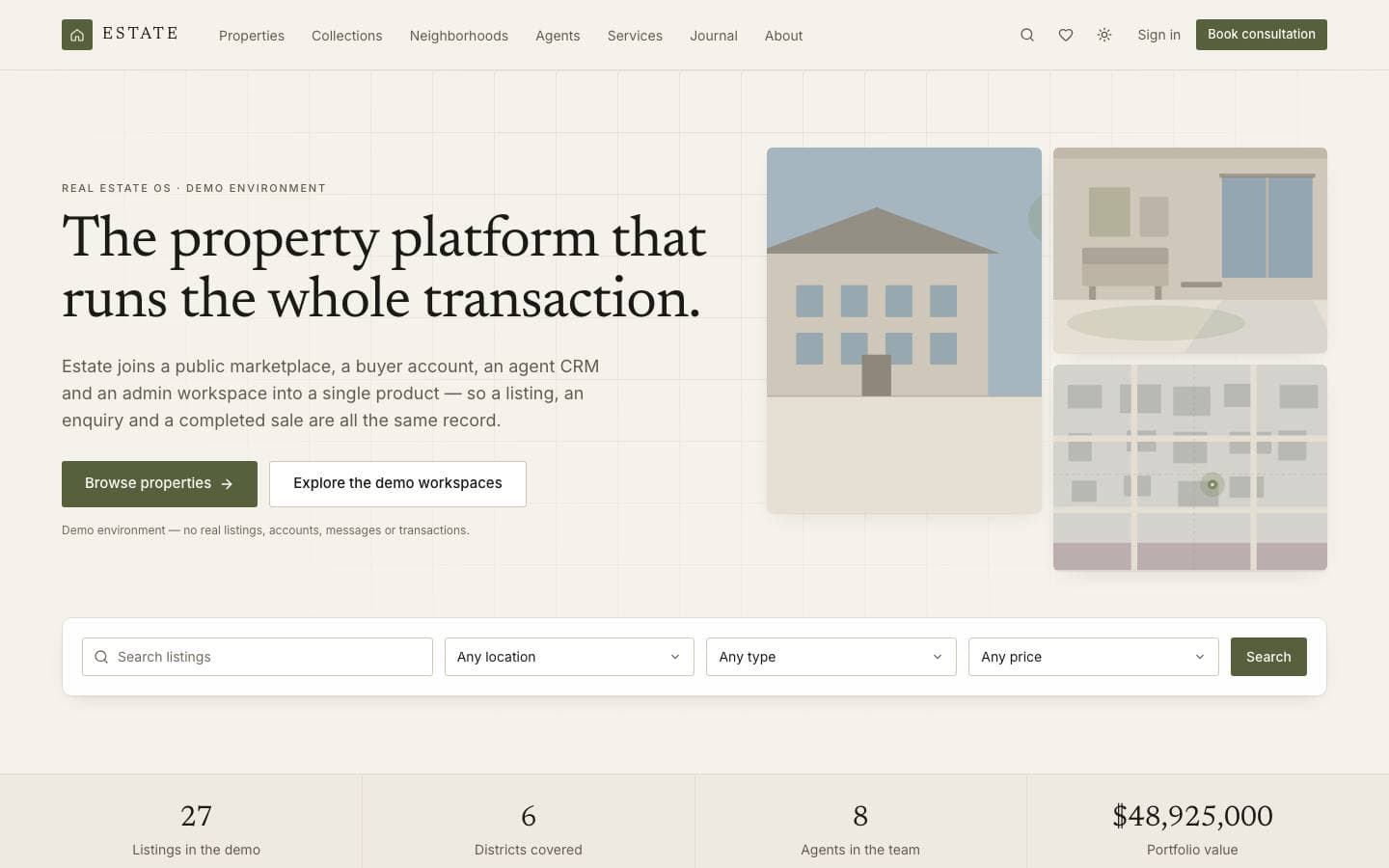
The public shop window: search, filters and listing cards backed by the same records the agents work from.
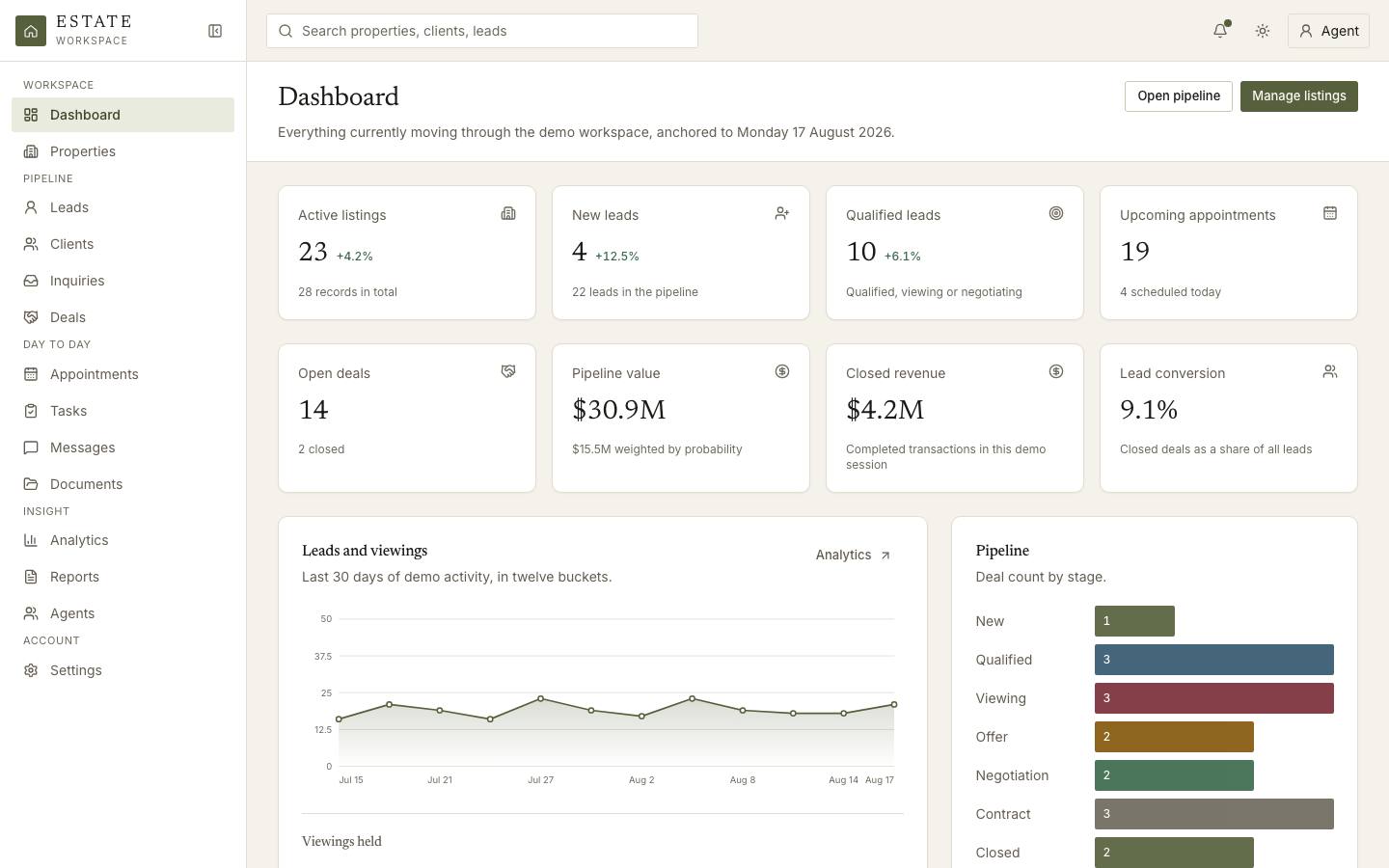
A working pipeline with leads, clients, deals and appointments — not a call-centre script.
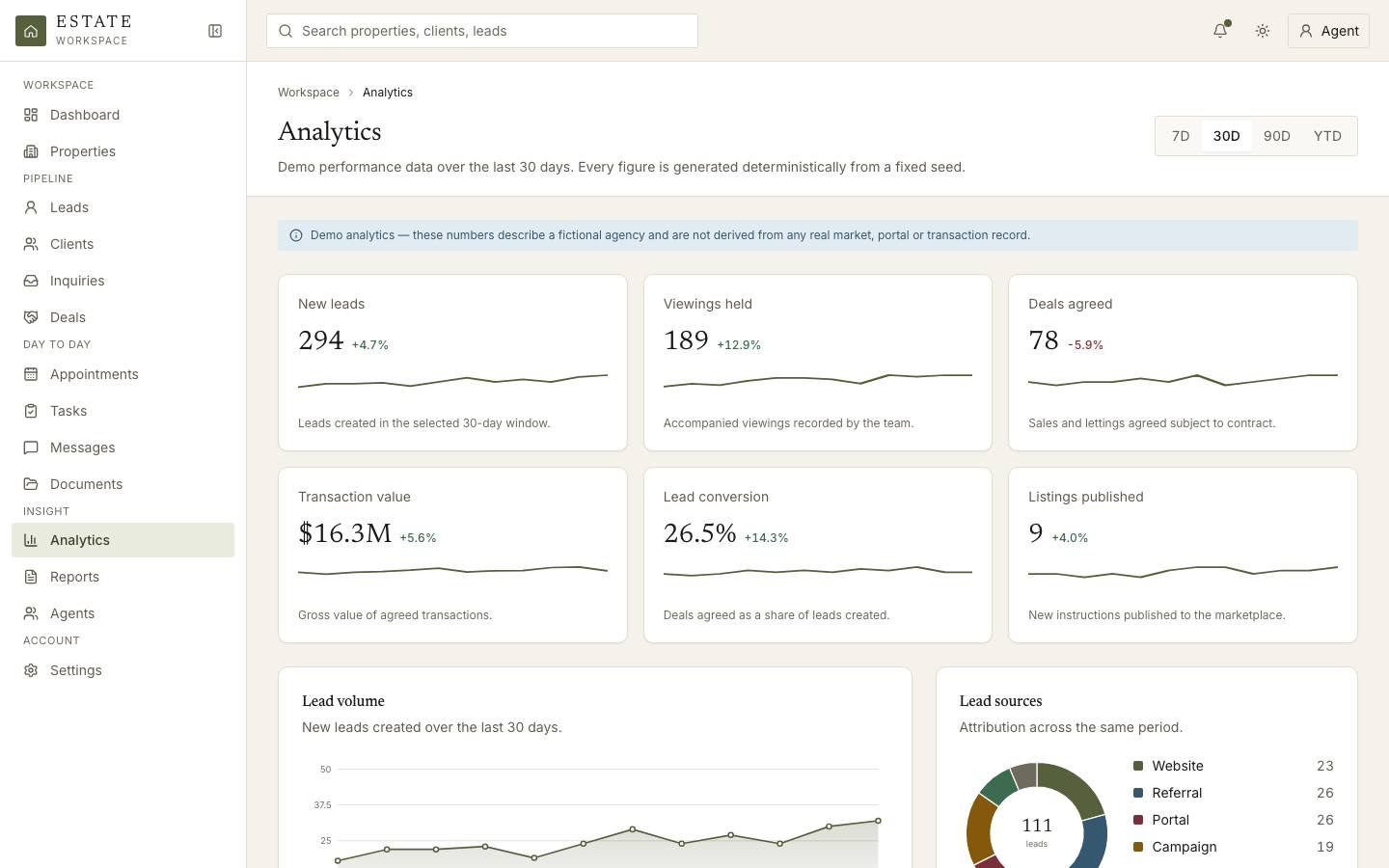
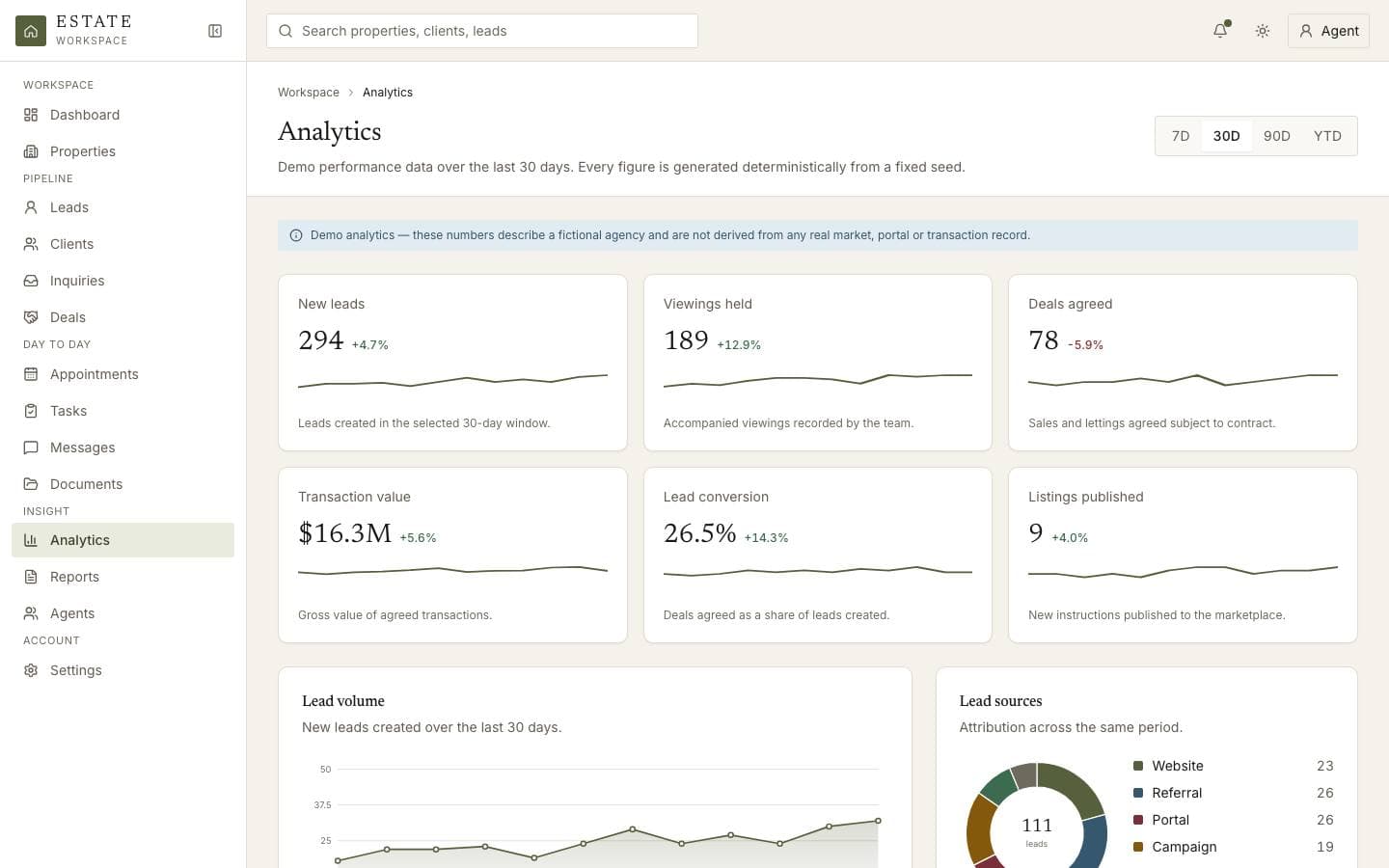
Operational reporting over the same data, so the numbers cannot disagree with the pipeline.
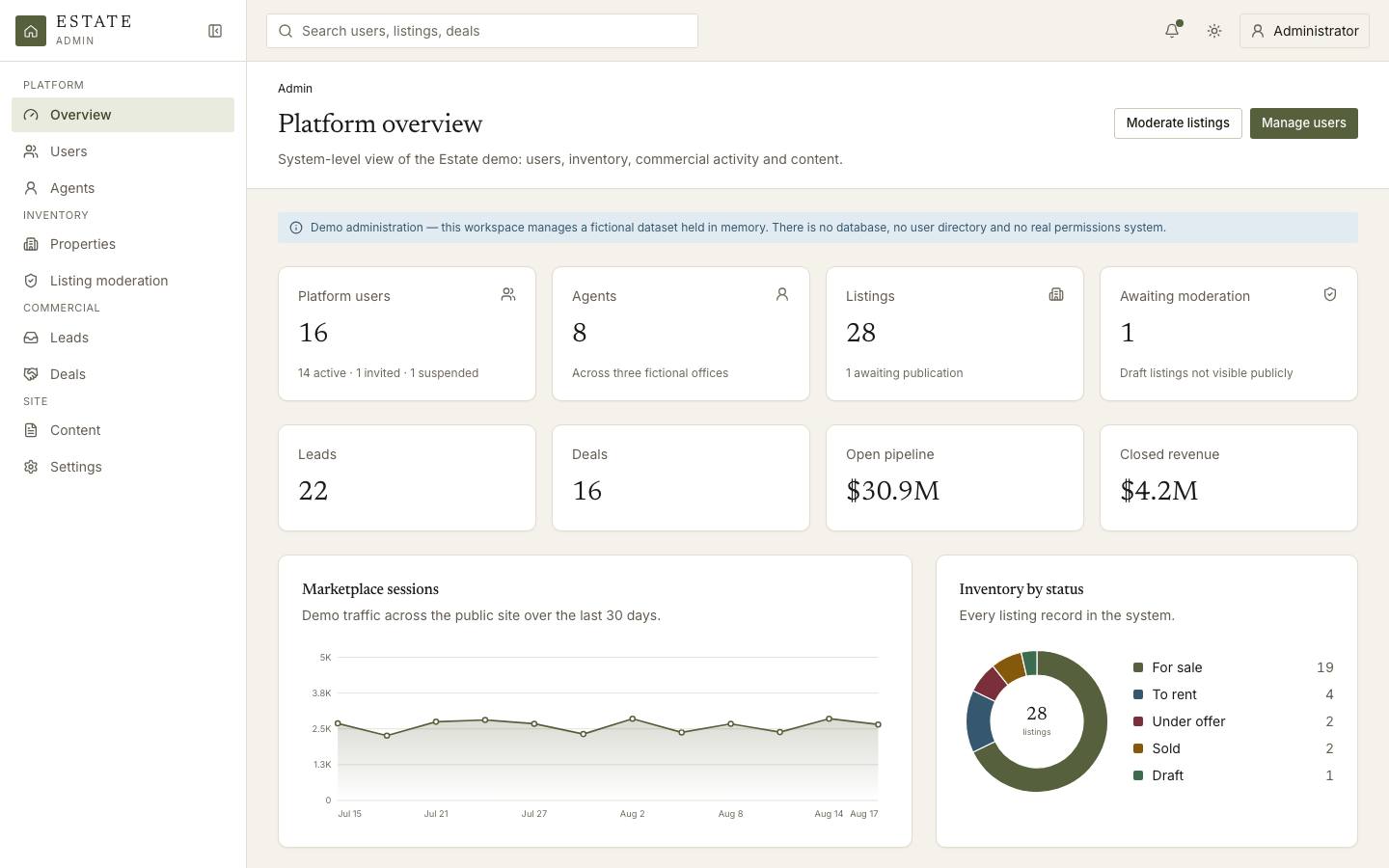
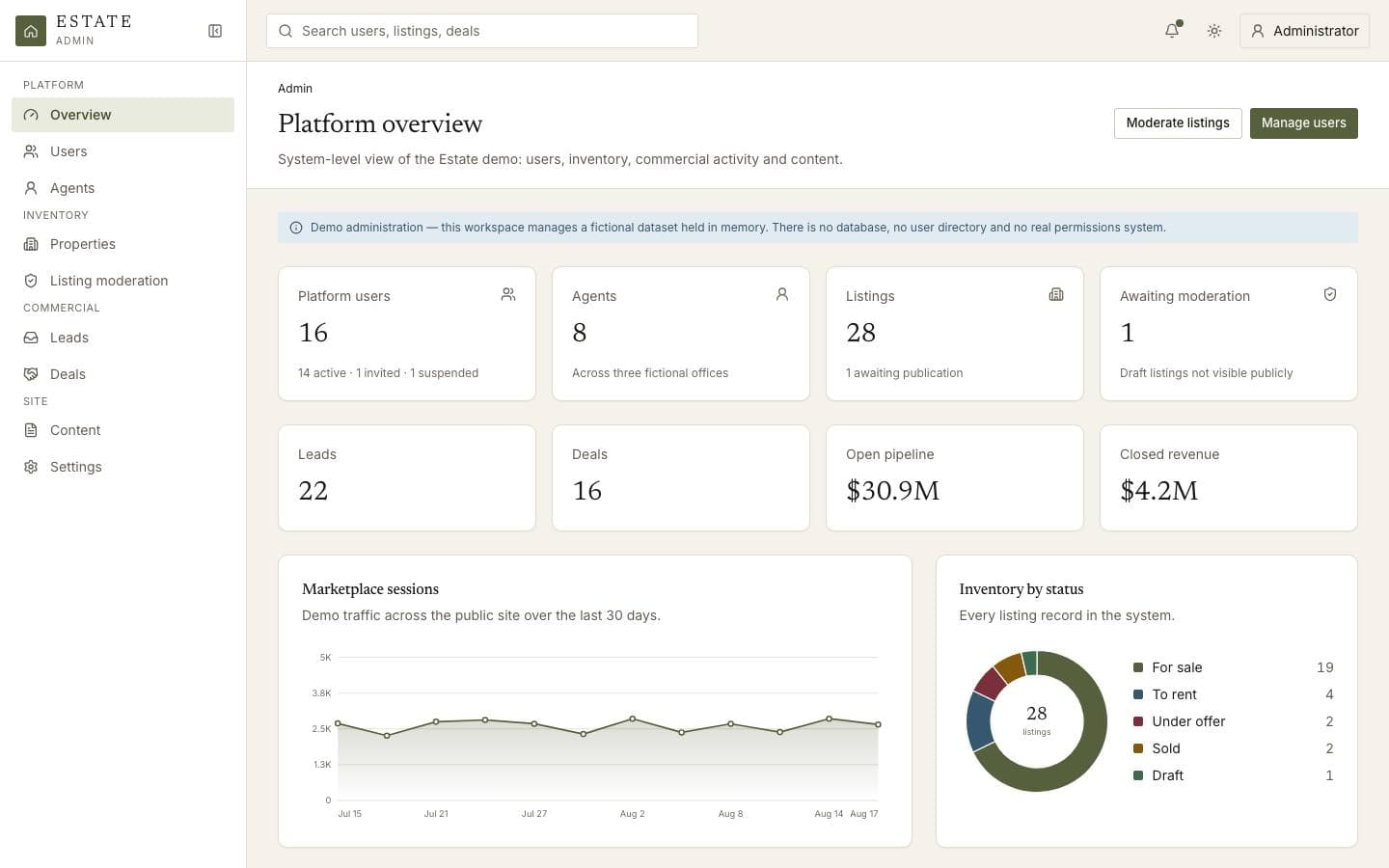
Platform administration: users, agents, listing moderation and site content.
Every screen below is the deployed template, captured from its own live preview.
01
The public shop window: search, filters and listing cards backed by the same records the agents work from.
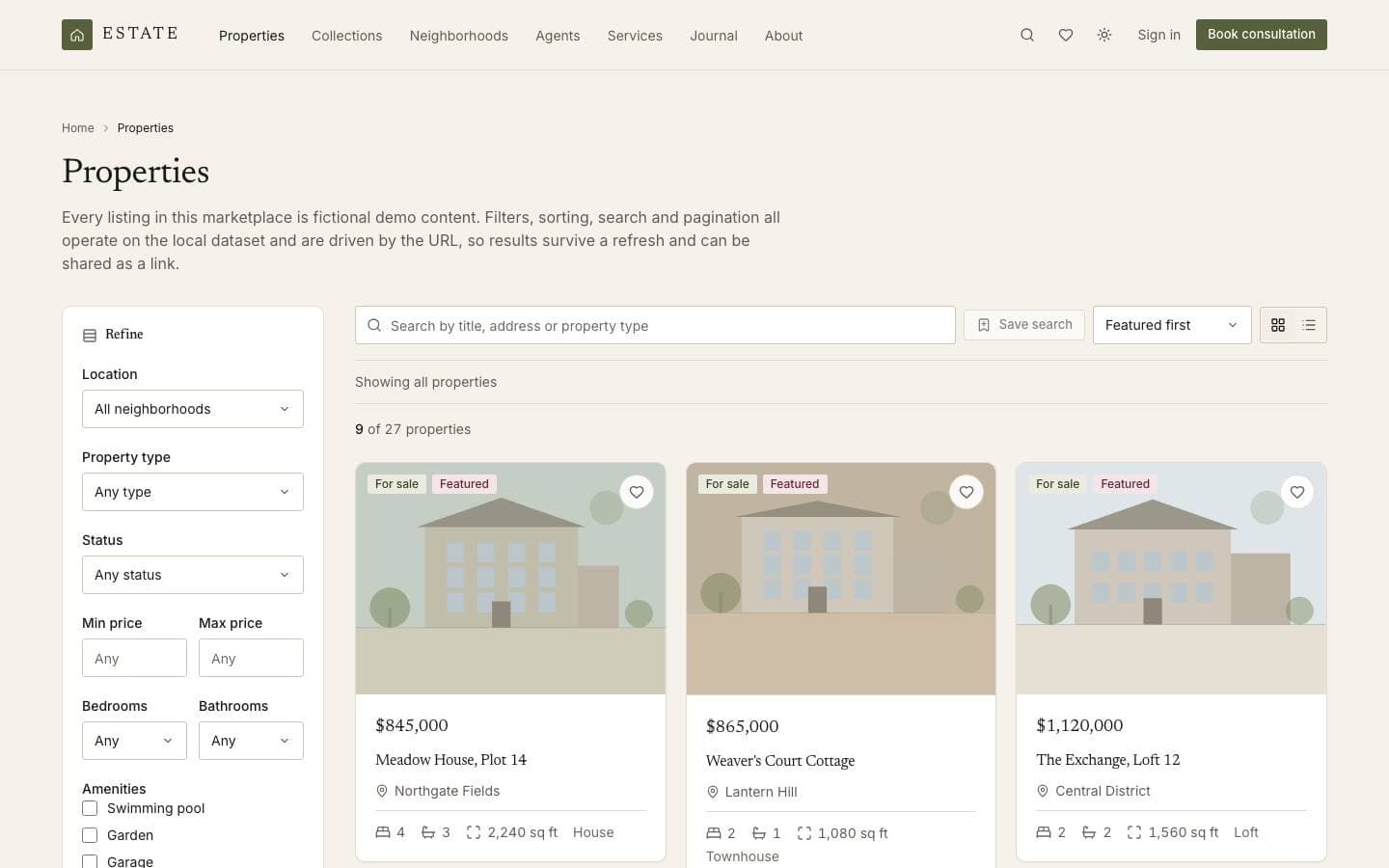
02
A working pipeline with leads, clients, deals and appointments — not a call-centre script.
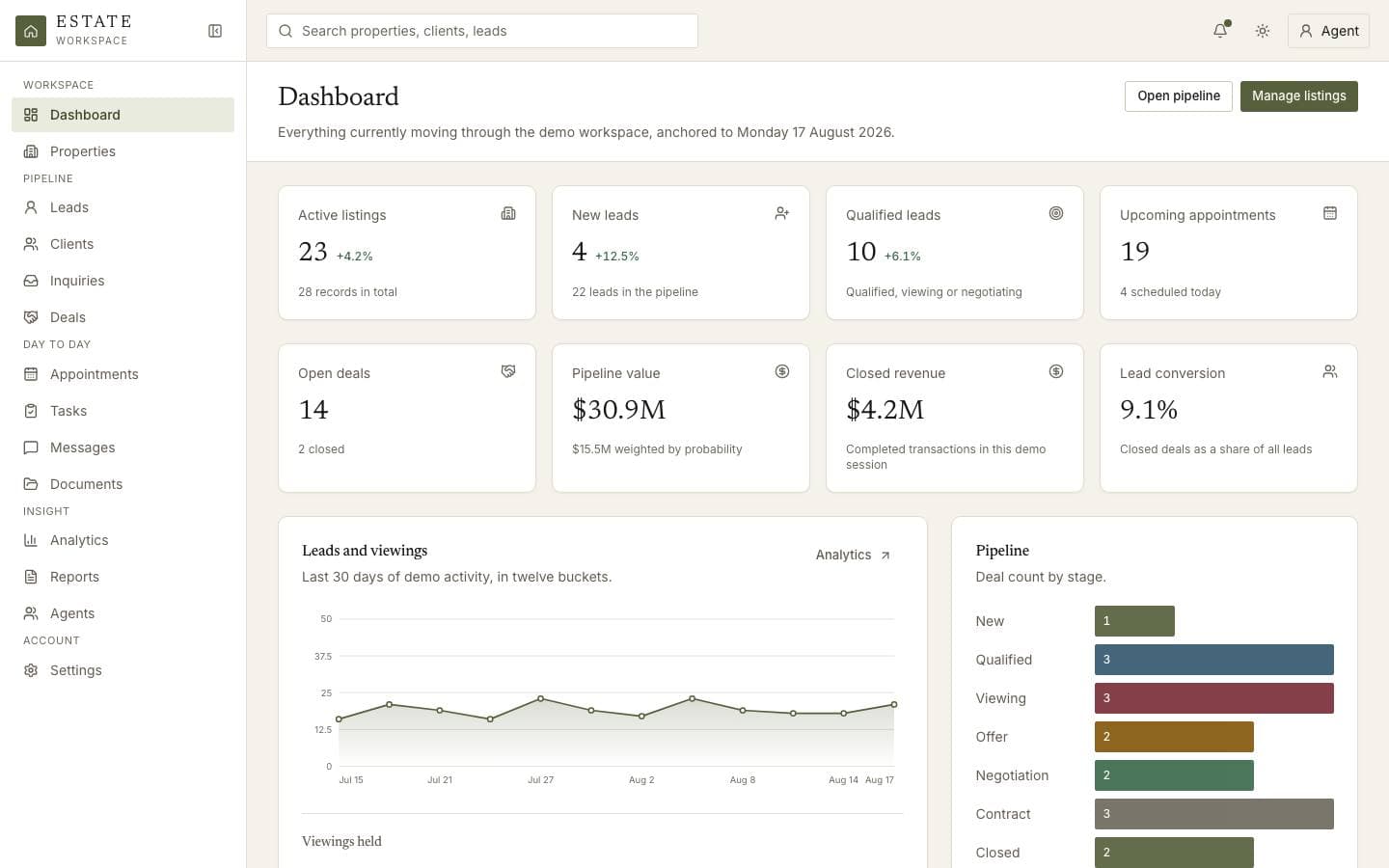
03
Operational reporting over the same data, so the numbers cannot disagree with the pipeline.
04
Platform administration: users, agents, listing moderation and site content.
Every line above is read from this product’s own licence and release record rather than written beside it, so it cannot promise something the release does not contain.
One listing model backs the marketplace, the shortlist, the viewing schedule and the agent pipeline. Roles are a layer on top rather than a fork: the buyer, the agent and the administrator see projections of the same records, which is what keeps four workspaces consistent without four codebases.
Listing ──┬──▶ Marketplace  (public)
          ├──▶ Shortlist ──▶ Viewings ──▶ Offer  (buyer)
          ├──▶ Pipeline ──▶ Analytics             (agent)
└──▶ Admin workspace (staff)estate/
├── app/
│ ├── page.tsx
│ ├── properties/[slug]/page.tsx
│ ├── neighborhoods/page.tsx
│ ├── agents/page.tsx
│ ├── app/page.tsx
│ └── admin/page.tsx
├── components/
└── content/The archive contains the full source. There is no installer and no post-install script.
unzip estate.zip
cd estatepnpm installCopy the example file and fill in the variables listed under Environment variables.
cp .env.example .envpnpm devRuns formatting, lint, type-check, tests and a production build.
pnpm check| Variable | Required | Description |
|---|---|---|
DATABASE_URL | Required | PostgreSQL connection string. Use a pooled endpoint in serverless environments.postgresql://user:pass@localhost:5432/app |
NEXT_PUBLIC_APP_URL | Required | Absolute origin of the deployment. Used for canonical URLs and metadata.https://app.example.com |
LOG_LEVEL | Optional | debug | info | warn | error. Defaults to info in production. |
Zero-config. Set the environment variables listed above and connect the repository.
A multi-stage Dockerfile is included, producing a standalone image with no build toolchain.
Builds to a standard Node server. Nothing depends on a platform-specific runtime.
| Technology | Versions | Status |
|---|---|---|
| Next.js | ≥ 15 | Supported |
Initial commercial release
Initial commercial release
Documentation ships with the first release.
No. Every action in the demo is simulated against fixtures and there is no backend — the preview says so on its own page. The seam where a database goes is a single module, not a scatter of fetches.
Yes. Roles gate routes rather than duplicate them, so deleting a role removes its entry points and leaves the rest of the system intact.
Curated by us, not inferred — these are the ones that genuinely pair with it.
Products that share a framework with this one.
Documentation and guides that use this template as their example.