Getting started
From a purchased archive to a running development server, and what to change first.
UT Studio5 min read
Every UT Studio template ships as a source archive. There is no installer, no licence key to paste into a config file, and no build step that phones home. You unzip it, install dependencies, and it runs.
What you need
| Requirement | Version | Notes |
|---|---|---|
| Node.js | ≥ 22.12 | LTS or current |
| Package manager | pnpm ≥ 10 | npm and yarn also work |
| Operating system | macOS, Linux, Windows (WSL2) | — |
Unpack and run
The archive name carries the product slug and the exact version, which is how you can tell two downloads apart six months later.
unzip nordwell-1.0.0.zip
cd nordwell
pnpm install
cp .env.example .env
pnpm dev
The development server starts on port 3000. Every template in the catalogue uses the same four commands, so the second one you buy behaves like the first.
Verify the download
Each release publishes a SHA-256 checksum on the product page, before purchase rather than after. Comparing it is worth the ten seconds: it proves the bytes you have are the bytes we published, and it is the only check that catches a corrupted or tampered archive.
# macOS and Linux
shasum -a 256 nordwell-1.0.0.zip

# Windows (PowerShell)
Get-FileHash nordwell-1.0.0.zip -Algorithm SHA256
Checksums are per release, not per product
A new version publishes a new checksum. The old one stays valid for the old archive forever — published releases are immutable, so a checksum that matched once matches always.
What to change first
- Content. Every template keeps its copy in typed modules under `content/`, separate from the components that render it. Change words there, not in JSX.
- Tokens. Colour, type scale and spacing come from a token layer. Changing the brand is editing tokens, not hunting hex values through components.
- Metadata. Set the site name, description and absolute URL so canonical links and social cards resolve to your domain rather than to a placeholder.
- Routes. Delete the pages you do not need before adding your own. It is much easier to remove a section while the template is still exactly as shipped.
Set the absolute URL before you deploy
Templates read the deployment origin from an environment variable to build canonical and OpenGraph URLs. Leave it unset and you will ship canonical tags pointing at localhost, which search engines treat as a broken page.
Where the licence sits
Nothing in the code enforces your licence. There is no runtime check, no phone-home and no key. The licence is a legal document, and the archive is source you own a copy of. What the licence governs is what you may build with it and who may build — not whether the code will run.
Templates that show the structure well
If you are evaluating rather than building, these three show the range: a marketing site, a product site and a full application with several workspaces.
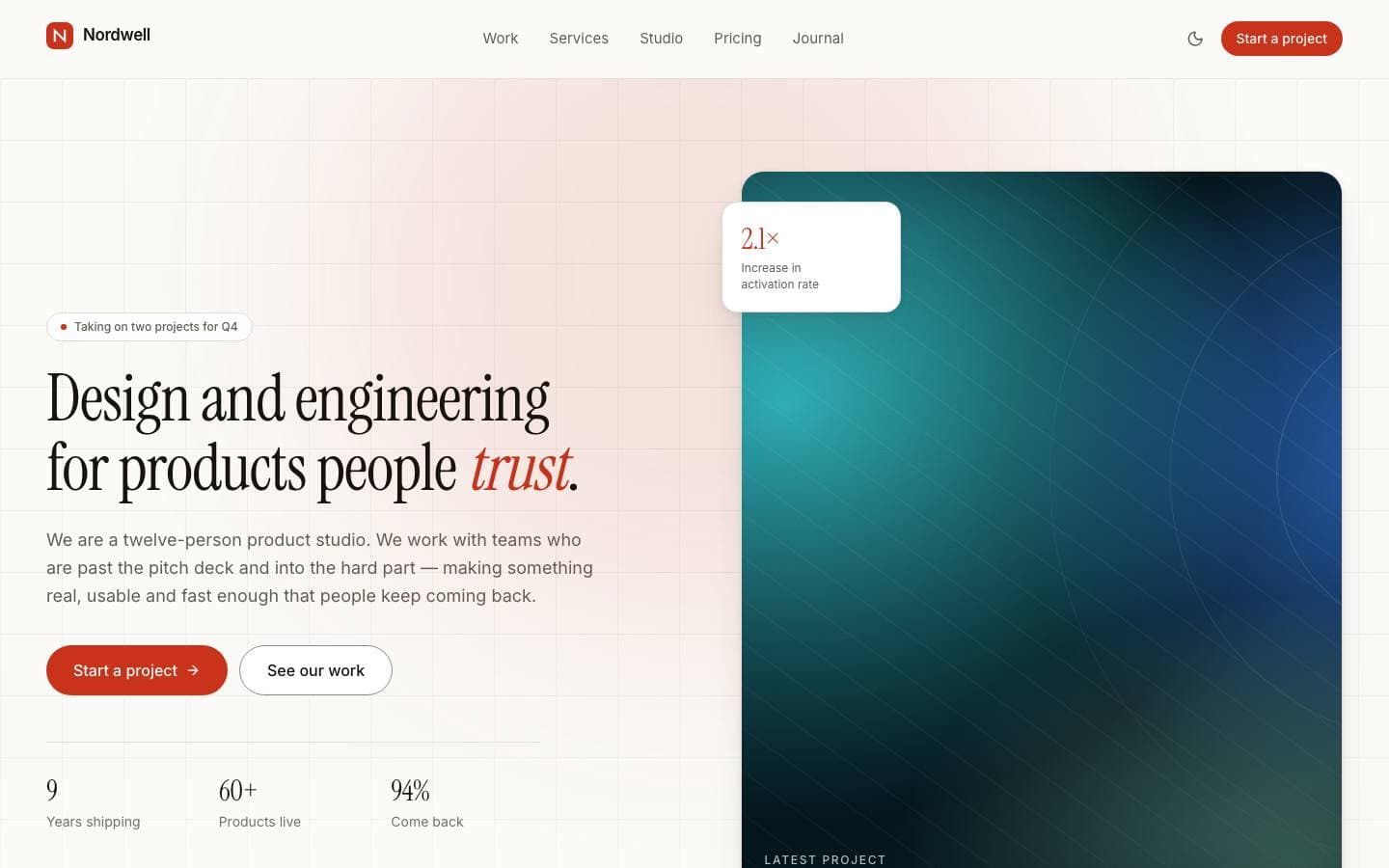
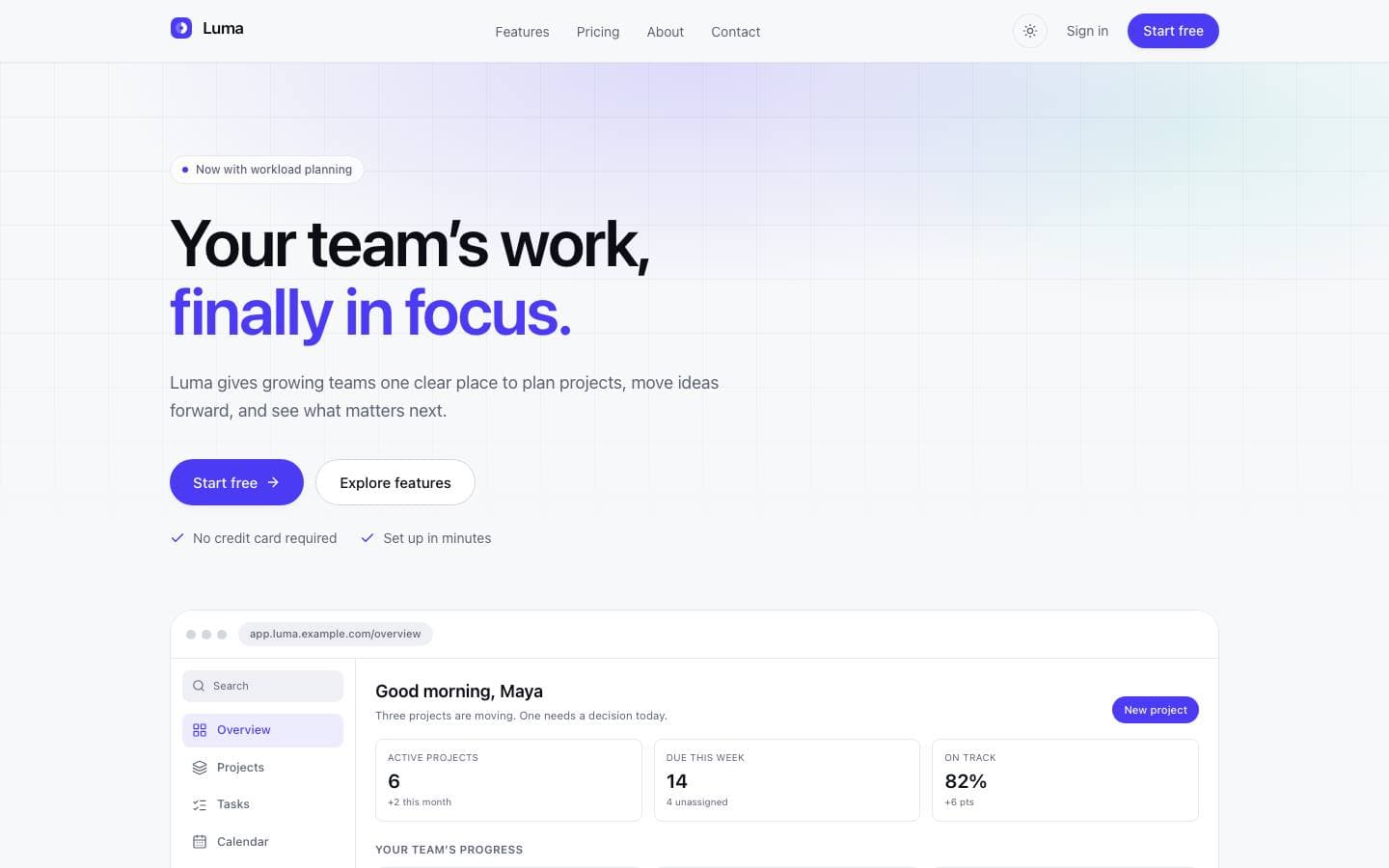
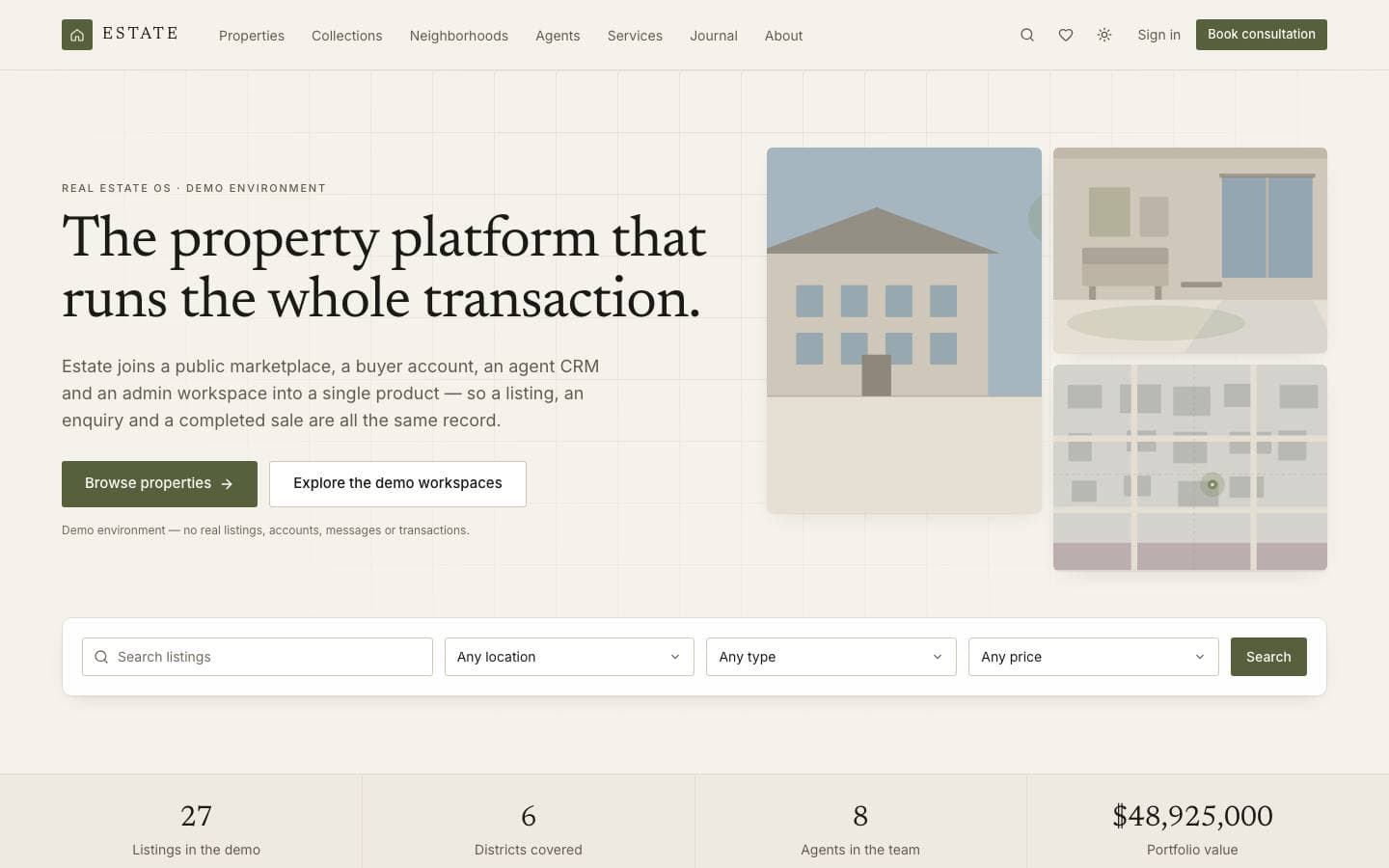
Templates mentioned here
Everything above is written against real products. These are the ones this page draws on.