1.0.0
Initial commercial release
- addedInitial commercial release
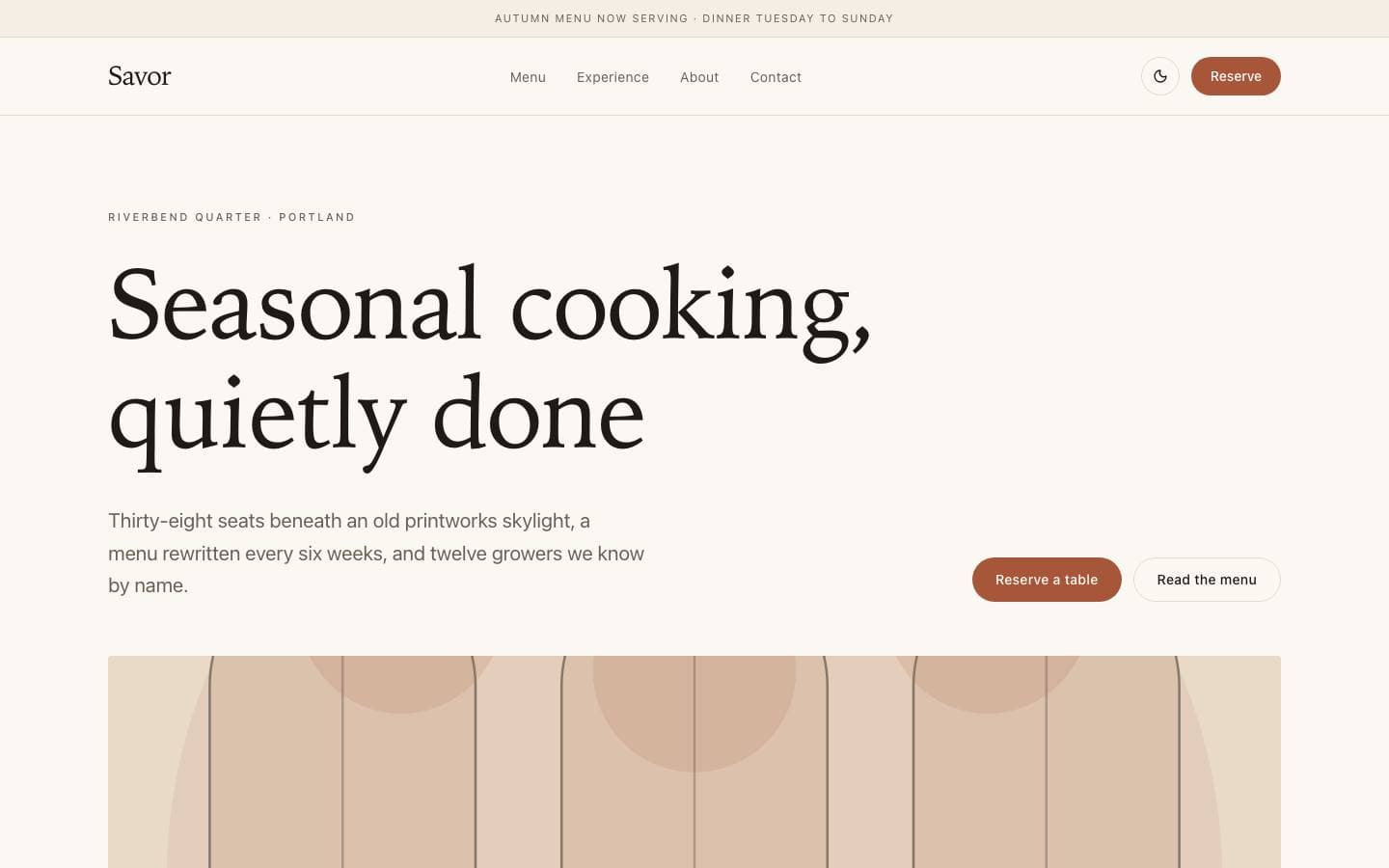
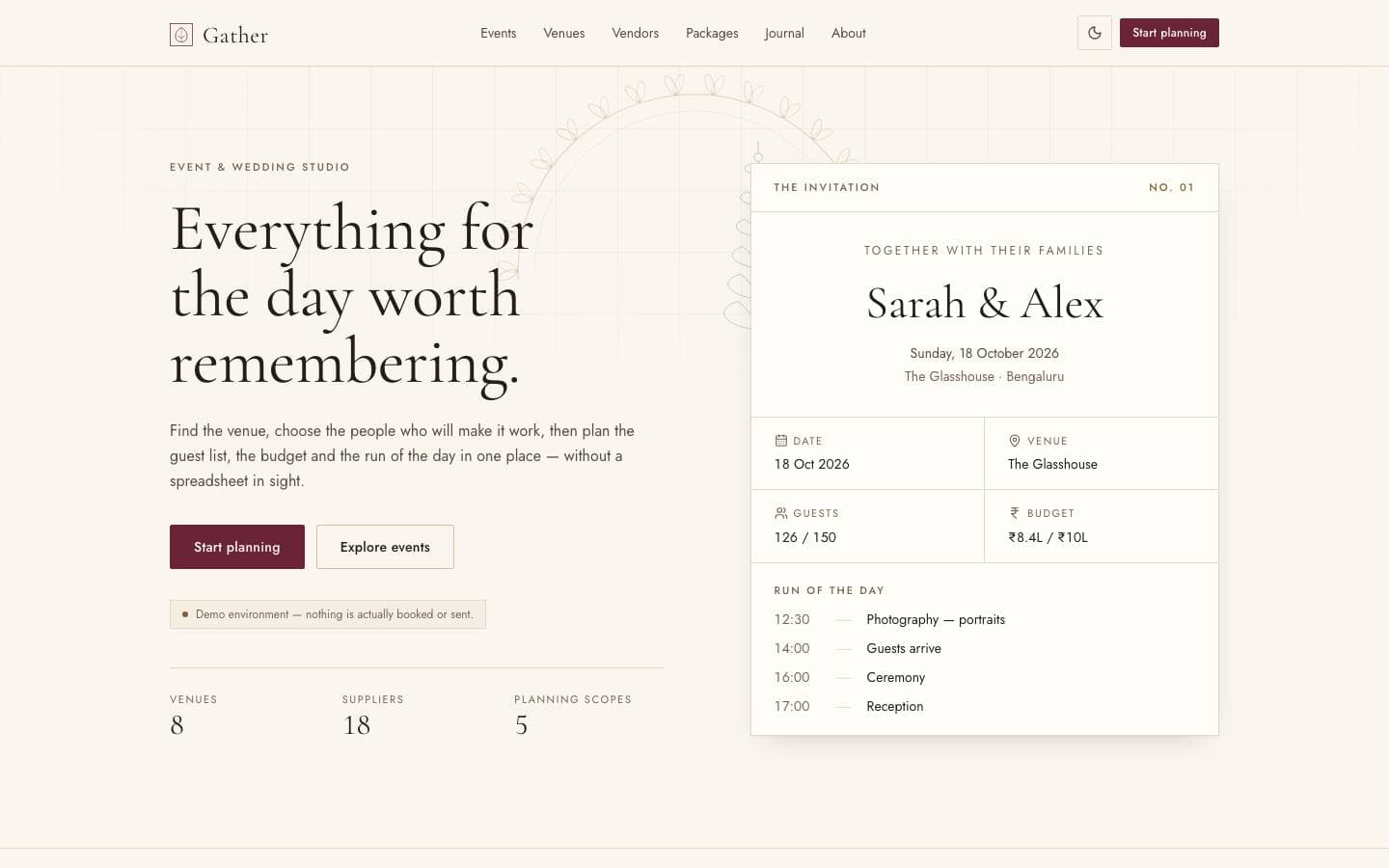
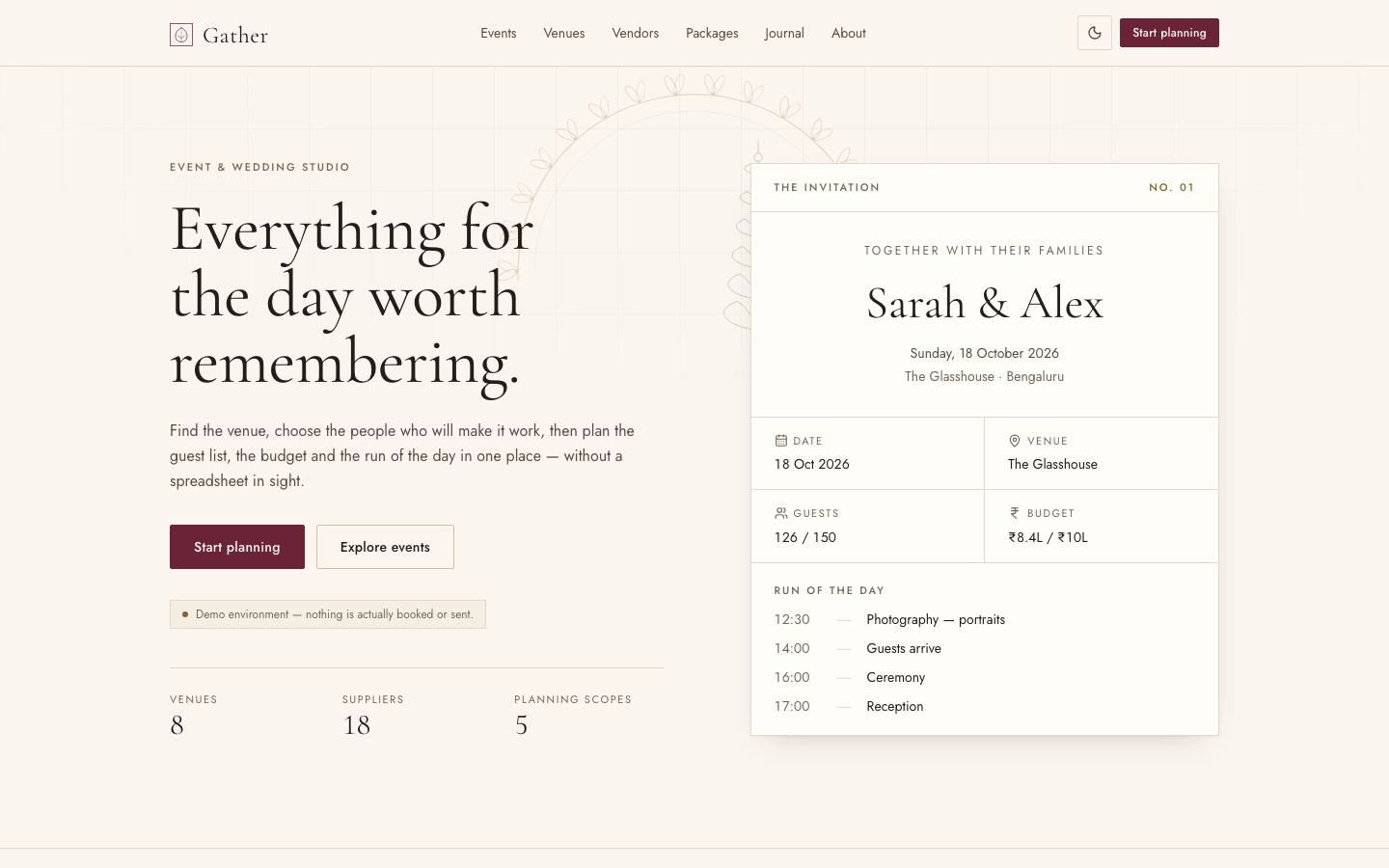
Event and wedding planning studio: venues, vendors, guests, budget and timeline
Preview only — not yet on sale.
Pro licence · what that covers
What this template is for. Each one is a filter in the catalogue, so the products beside it solve the same problem.
The day is one day; the planning is nine months. Gather is built around that asymmetry: a discovery surface for venues and vendors, and a planning workspace where the guest list, the budget and the timeline are three views of one model rather than three spreadsheets that disagree by March. Eight planner screens, six event types, and a vendor directory that reads like a recommendation.
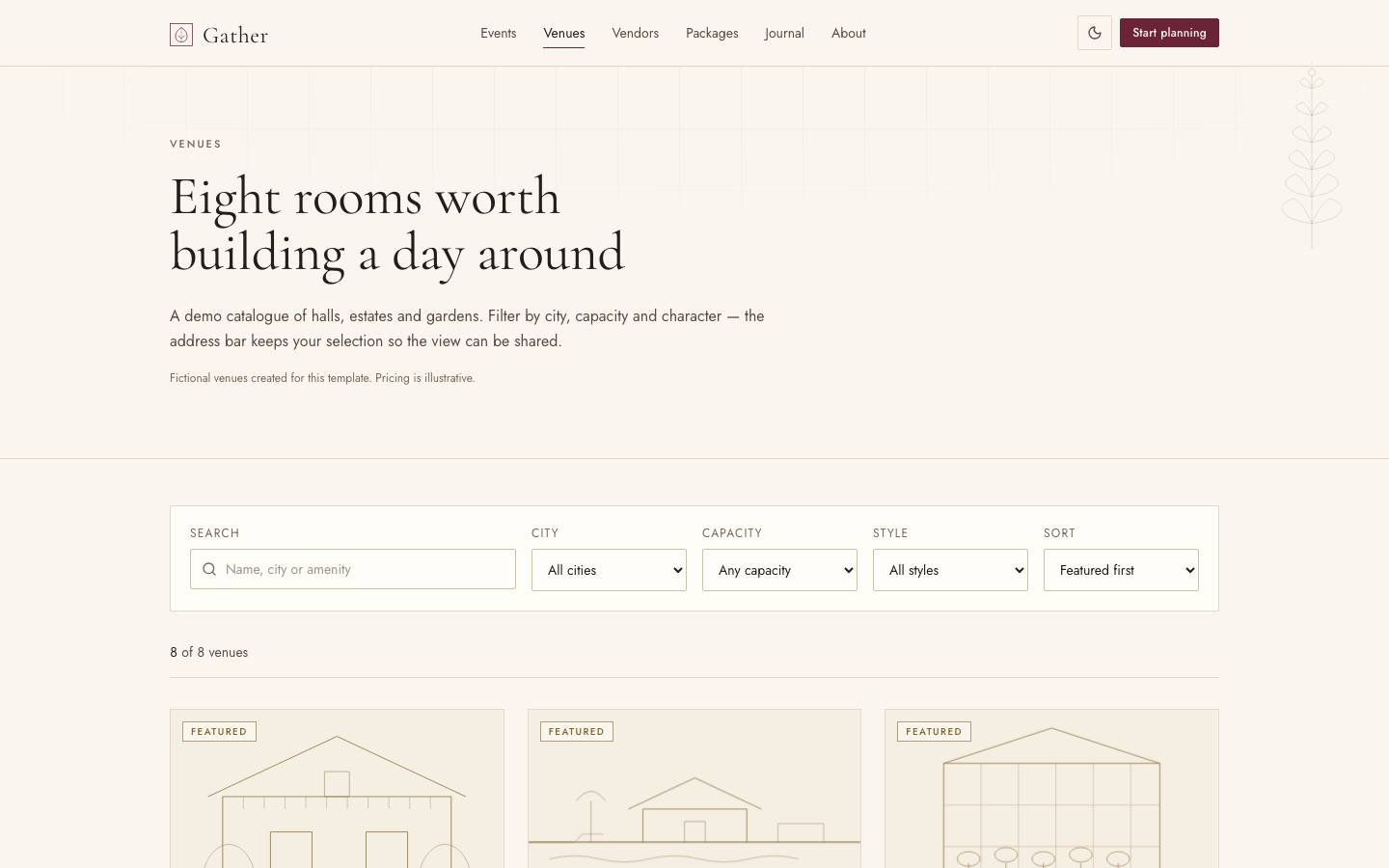
Start with the room, not the moodboard — venue profiles and a vetted vendor directory.
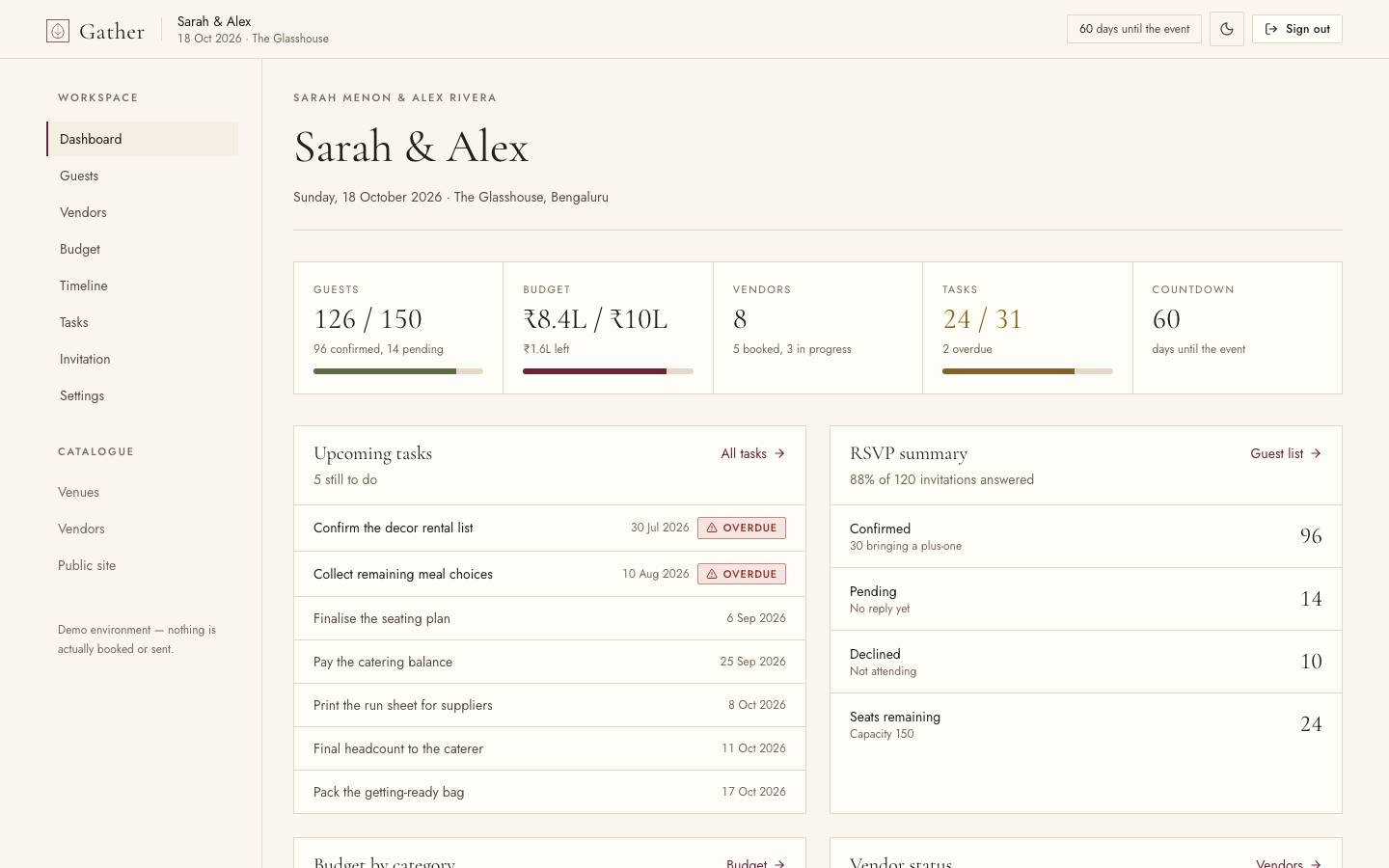
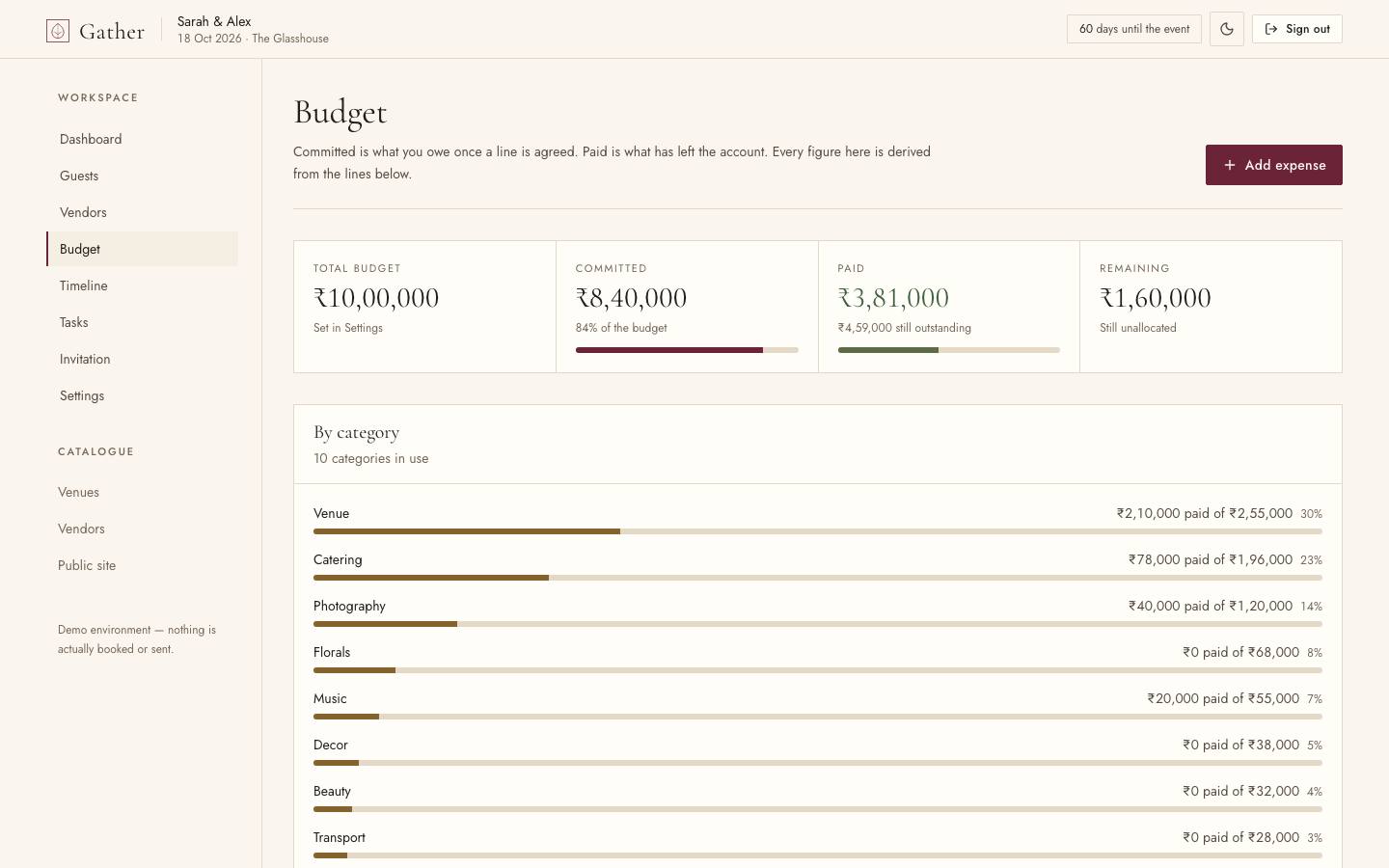
Guests, budget, timeline and tasks as views of one model, so the three cannot drift apart.
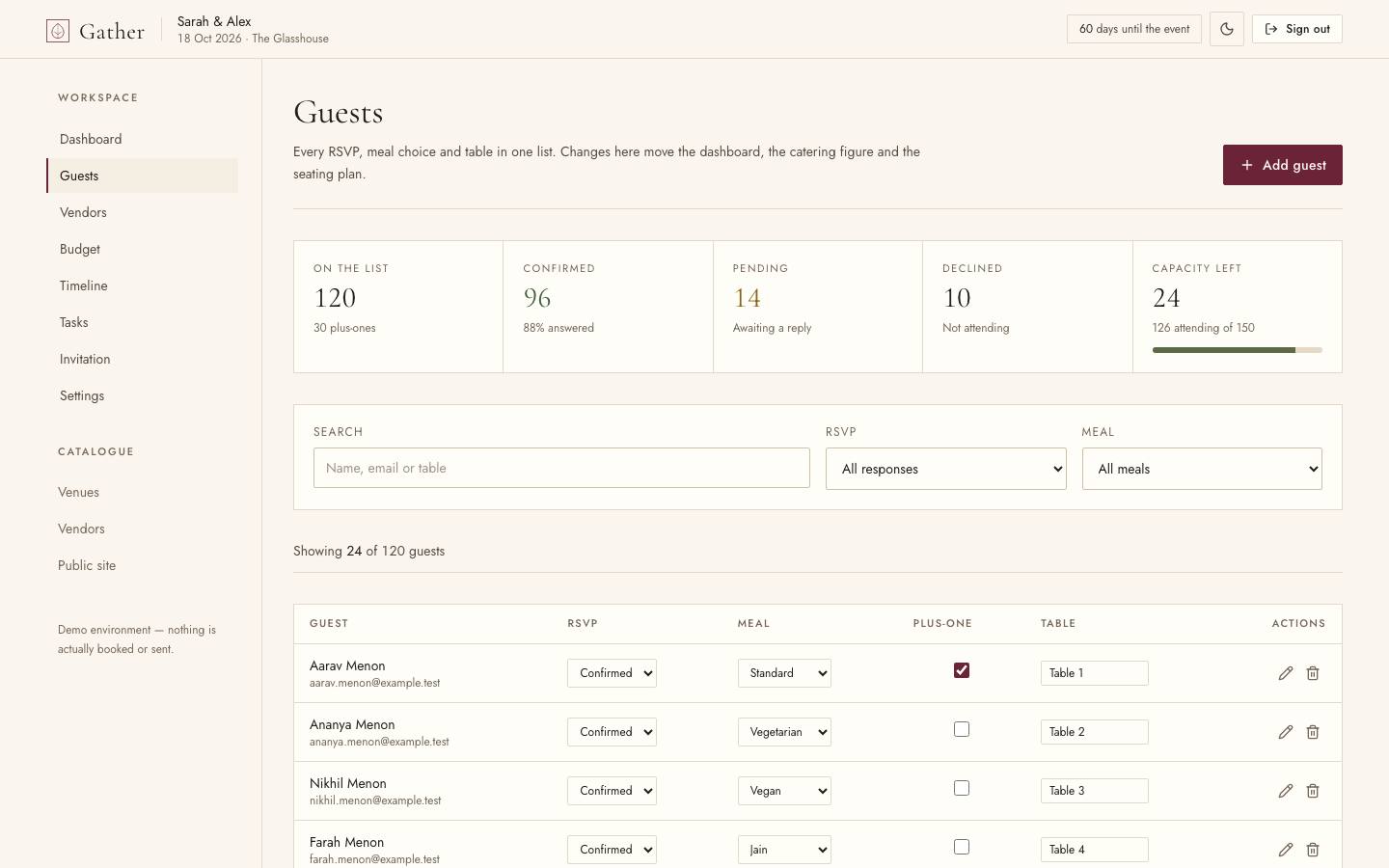
The guest list that drives the catering total and the seating plan rather than sitting beside them.
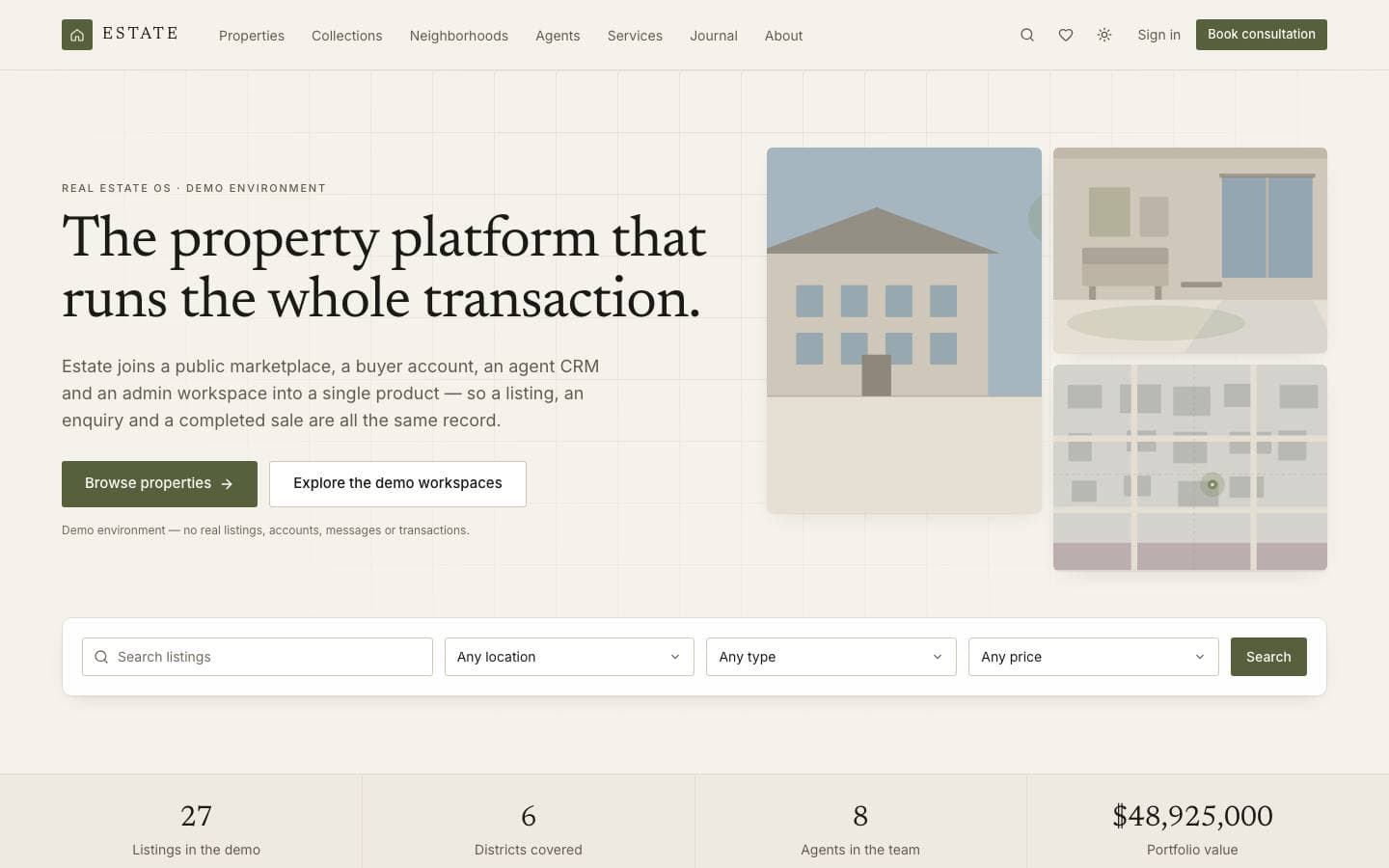
Every screen below is the deployed template, captured from its own live preview.
01
Start with the room, not the moodboard — venue profiles and a vetted vendor directory.
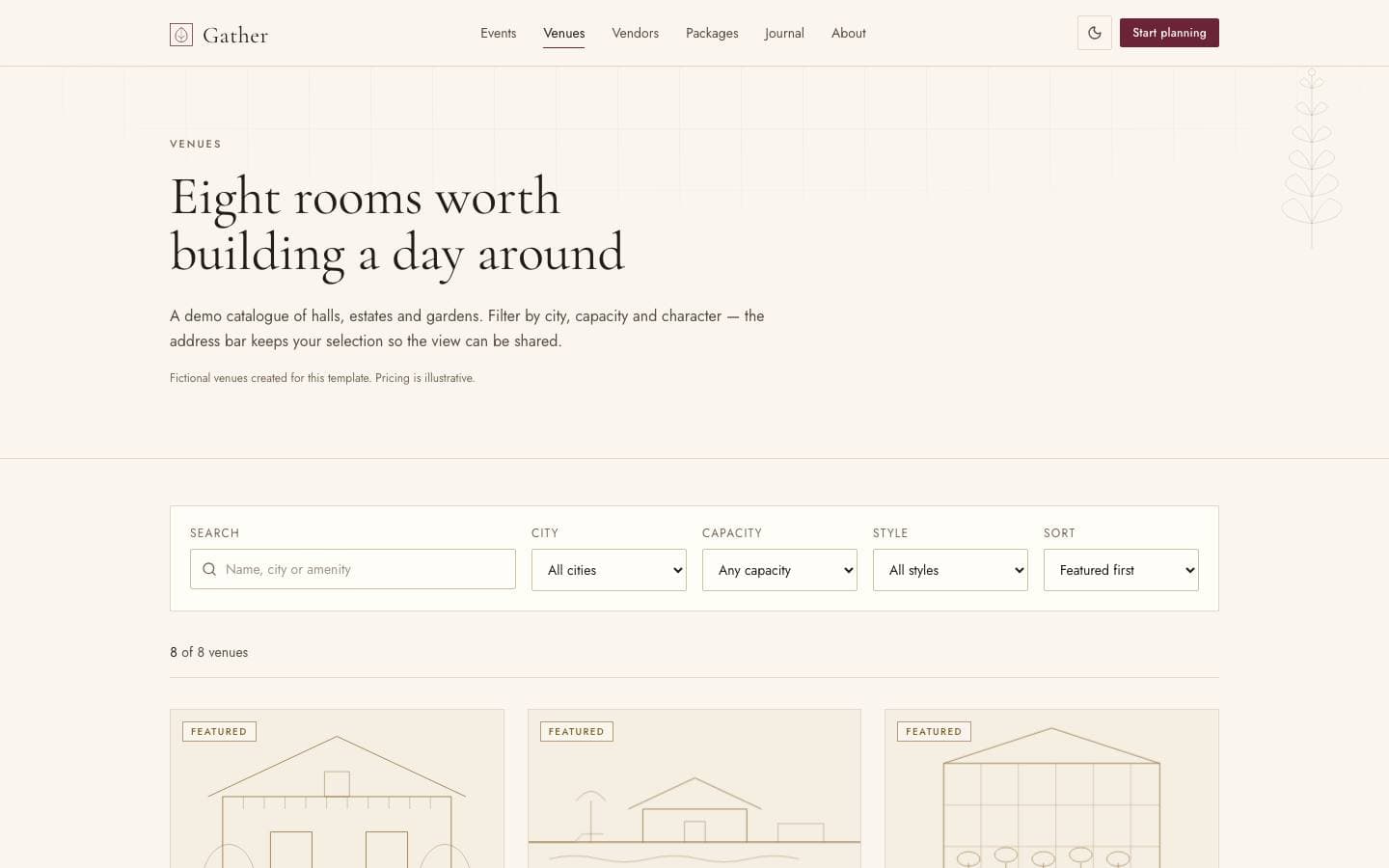
02
Guests, budget, timeline and tasks as views of one model, so the three cannot drift apart.
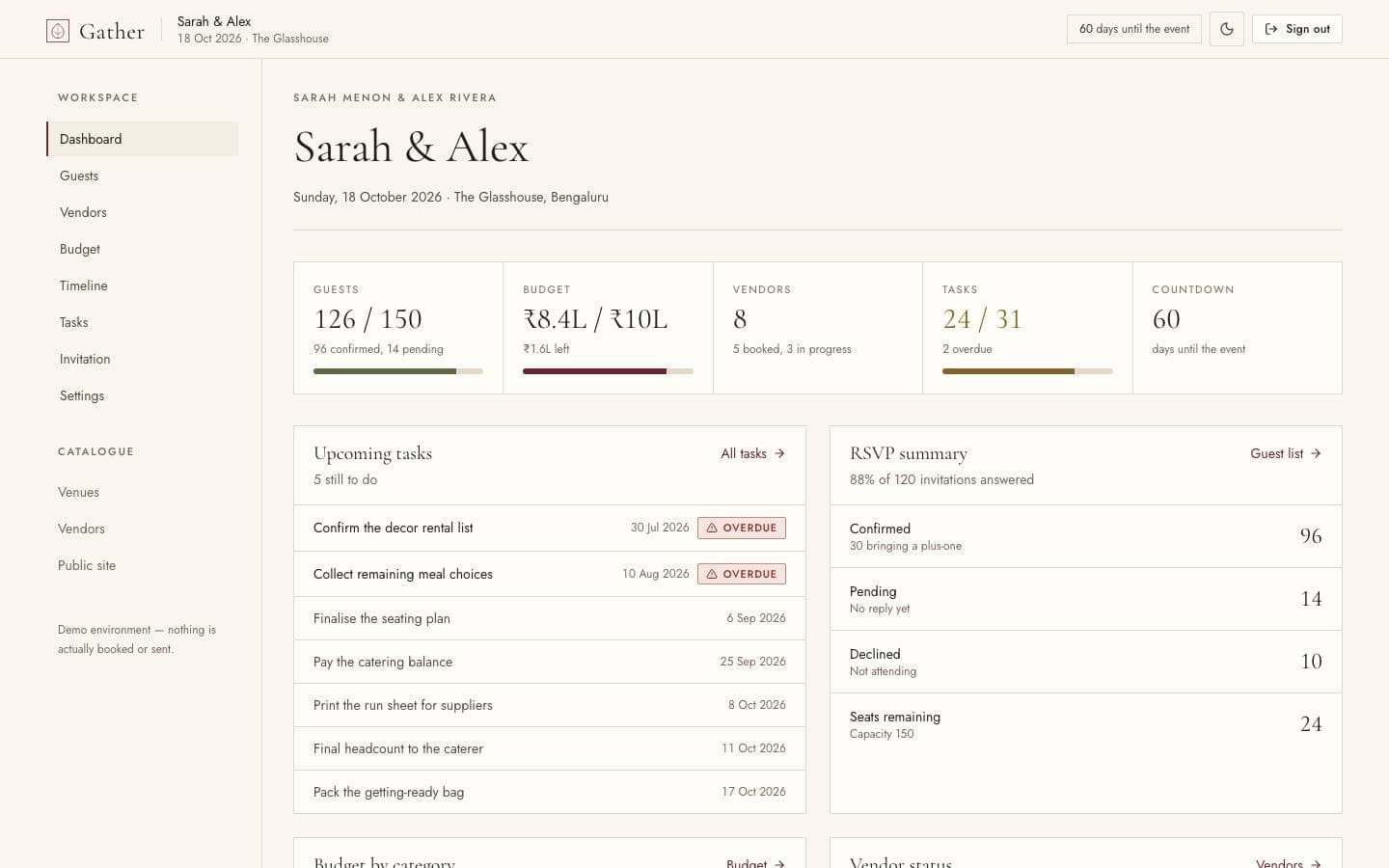
03
The guest list that drives the catering total and the seating plan rather than sitting beside them.
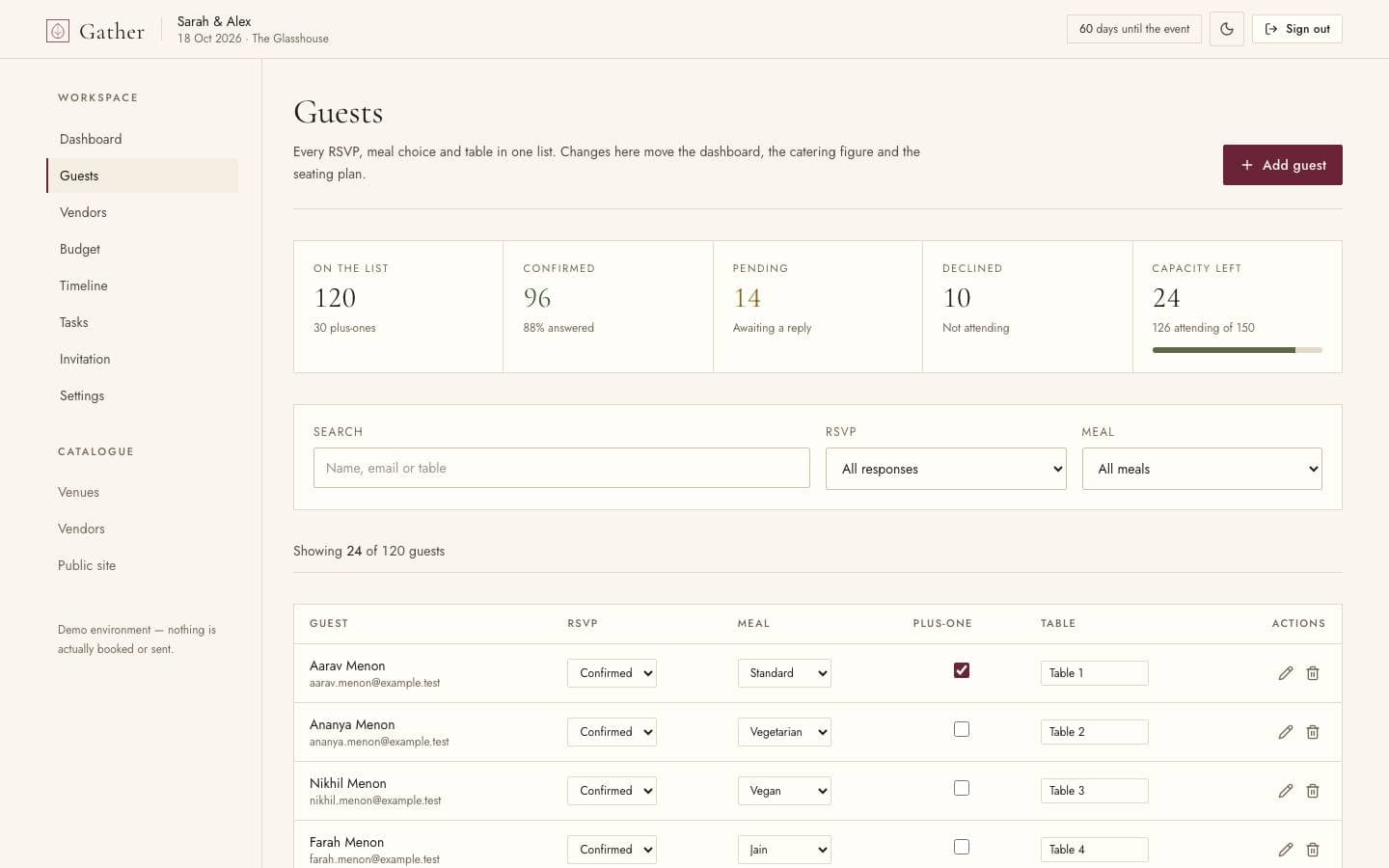
Every line above is read from this product’s own licence and release record rather than written beside it, so it cannot promise something the release does not contain.
A guest is a budget line and a timeline dependency, so adding forty people to the list moves the catering total and the seating milestone without anybody re-entering anything. Discovery and planning share the venue and vendor records, which is why a shortlisted venue arrives in the workspace already populated.
gather/
├── app/
│   ├── page.tsx
│   ├── venues/[slug]/page.tsx
│   ├── vendors/page.tsx
│   ├── packages/page.tsx
│   └── planner/page.tsx
├── components/
└── content/The archive contains the full source. There is no installer and no post-install script.
unzip gather.zip
cd gatherpnpm installCopy the example file and fill in the variables listed under Environment variables.
cp .env.example .envpnpm devRuns formatting, lint, type-check, tests and a production build.
pnpm check| Variable | Required | Description |
|---|---|---|
DATABASE_URL | Required | PostgreSQL connection string. Use a pooled endpoint in serverless environments.postgresql://user:pass@localhost:5432/app |
NEXT_PUBLIC_APP_URL | Required | Absolute origin of the deployment. Used for canonical URLs and metadata.https://app.example.com |
LOG_LEVEL | Optional | debug | info | warn | error. Defaults to info in production. |
Zero-config. Set the environment variables listed above and connect the repository.
A multi-stage Dockerfile is included, producing a standalone image with no build toolchain.
Builds to a standard Node server. Nothing depends on a platform-specific runtime.
| Technology | Versions | Status |
|---|---|---|
| Next.js | ≥ 15 | Supported |
Initial commercial release
Initial commercial release
Documentation ships with the first release.
It is a complete front end over fixtures. Persistence, authentication and payments are yours to add — the template does not pretend otherwise, and the seams are one module each.
Curated by us, not inferred — these are the ones that genuinely pair with it.
Products that share a framework with this one.