Template or build from scratch?
An honest comparison, including the cases where a template is the wrong answer.
UT Studio6 min read
We sell templates, so treat this page with appropriate suspicion. It is still worth writing honestly, because a template sold to somebody who needed something else produces a refund and a bad opinion.
What a template actually saves
Not typing. Typing was never the expensive part. What it saves is the accumulated cost of decisions: the type scale, the spacing rhythm, the focus treatment, the empty states, the loading states, the dark theme, the responsive behaviour of nineteen components — each individually small and collectively several weeks.
It also saves consistency, which is harder to buy than speed. A team of three building from scratch produces three interpretations of a button.
When a template is the right answer
- You are validating something and the interface is not the thing being validated.
- You need a professional result and have no designer.
- The category is well-understood — a marketing site, a dashboard, a booking flow — and your differentiation is elsewhere.
- You are one developer with a deadline.
- You want a reference for how this kind of thing is normally structured.
When it is the wrong answer
- The interface *is* the product. If your differentiation is the interaction model, starting from someone else's is starting behind.
- You have a mature design system already. Merging two systems costs more than building on yours.
- Your requirements are genuinely unusual. Bending a template that assumed otherwise is worse than an empty folder.
- You cannot read the stack. A template you cannot maintain is a liability with a deadline attached.
The honest cost comparison
| Template | From scratch | |
|---|---|---|
| First screen | Hours | Days |
| Design consistency | Included | Ongoing effort |
| Dark theme | Usually included | A week, done properly |
| Accessibility baseline | Usually included | Continuous |
| Fits your exact model | Partly | Exactly |
| Understanding the code | You must read it | You wrote it |
| Upgrade path | Depends on your edits | Yours |
The middle option people forget
A component library or design system rather than a finished template: you get the decisions — tokens, primitives, accessibility, theming — and compose your own screens. More work than a template, far less than starting empty, and no assumptions about your business baked in.
The real question
Not "template or scratch" but "which decisions do I want to make myself?" Make the ones that differentiate you. Buy the rest.
The middle option
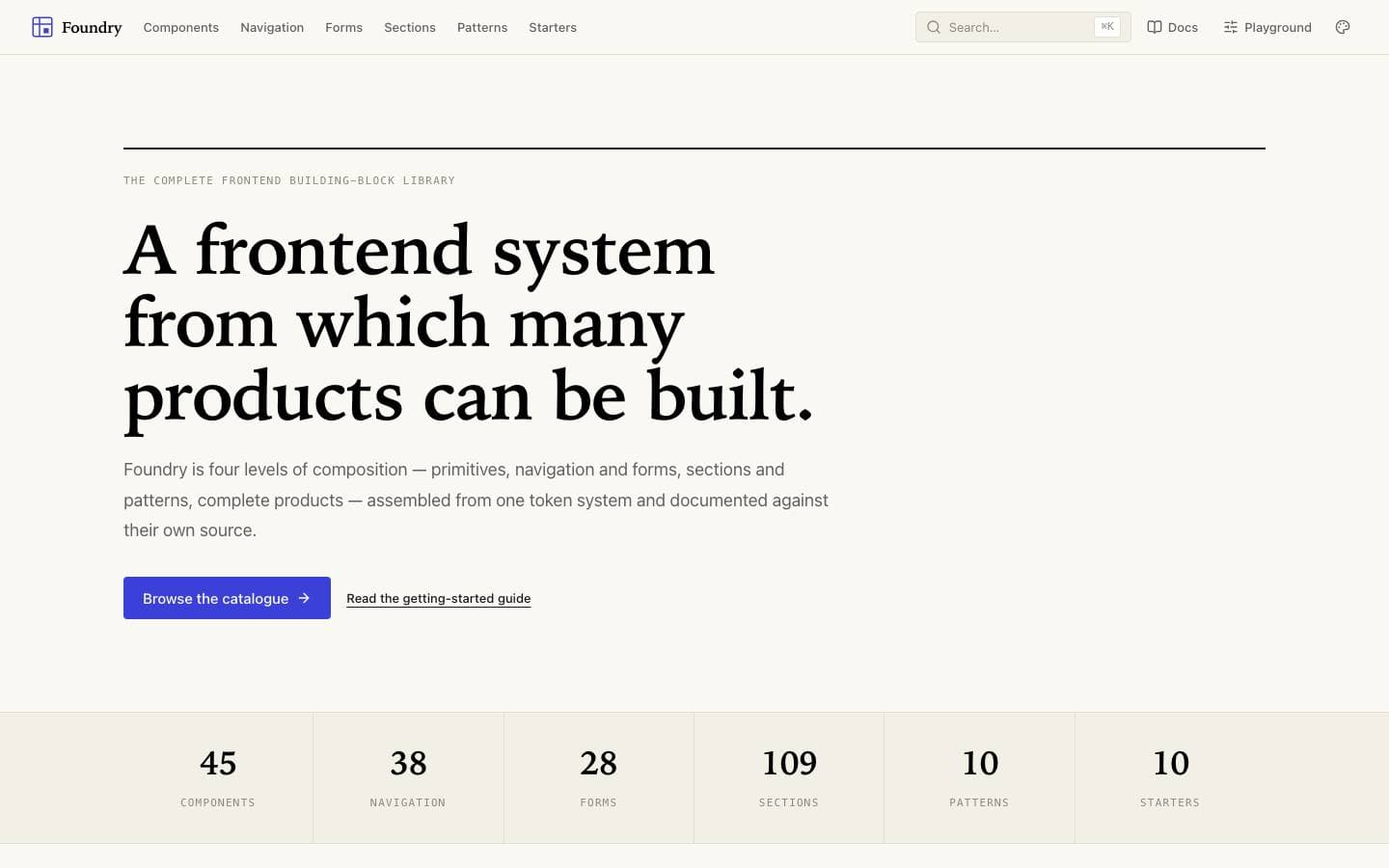
Templates mentioned here
Everything above is written against real products. These are the ones this page draws on.