1.0.0
Initial commercial release
- addedInitial commercial release
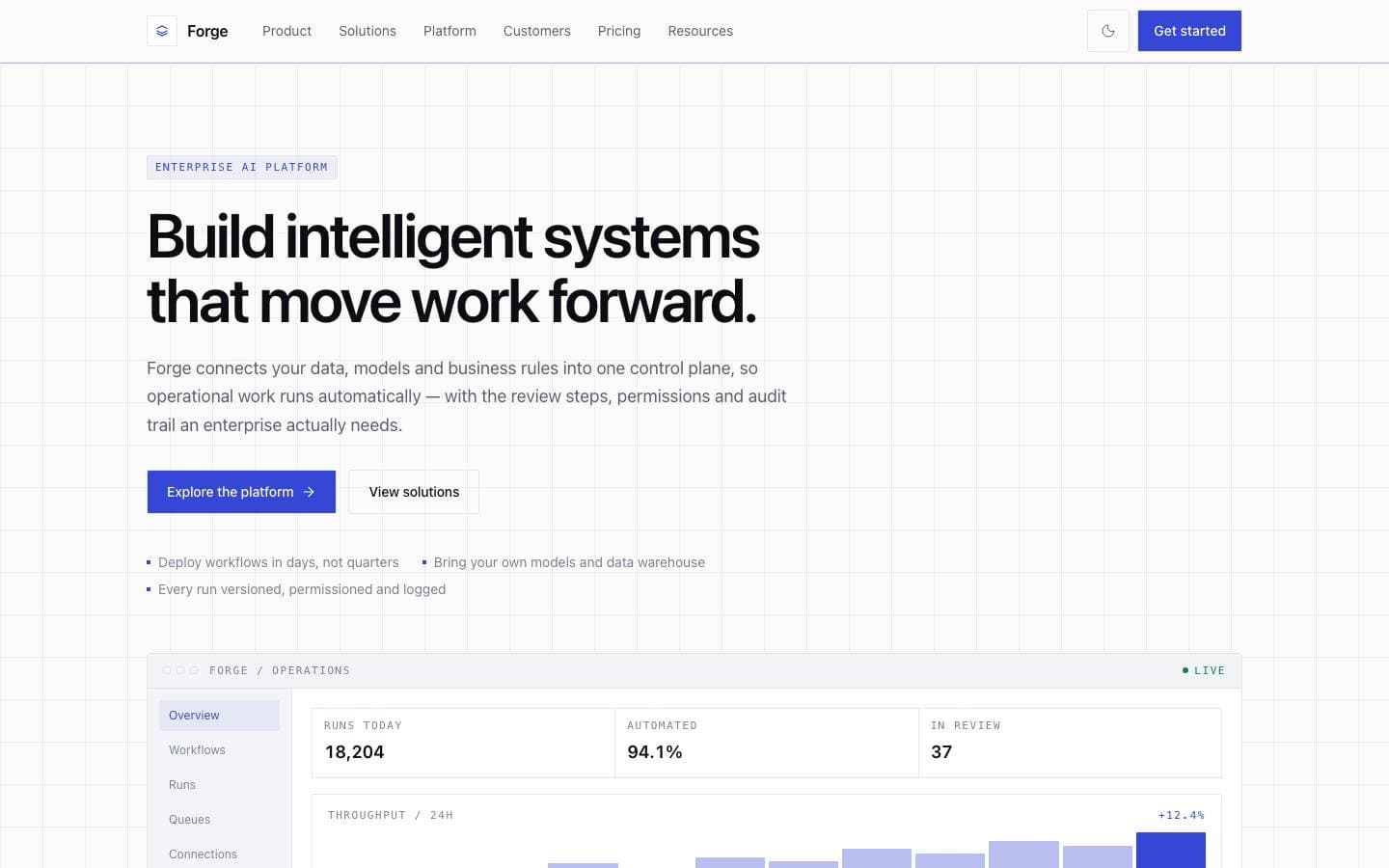
Enterprise AI control plane for building, governing and operating intelligent workflows
Preview only — not yet on sale.
Pro licence · what that covers
What this template is for. Each one is a filter in the catalogue, so the products beside it solve the same problem.
Forge is the site an enterprise AI platform needs before it can be bought: a product story told as a pipeline rather than a feature list, a solutions layer per team size, and the security and pricing pages a procurement review will actually open. Every section is written for the buyer who has to defend the purchase internally — which is why governance, exception handling and the developer surface get as much room as the canvas does.
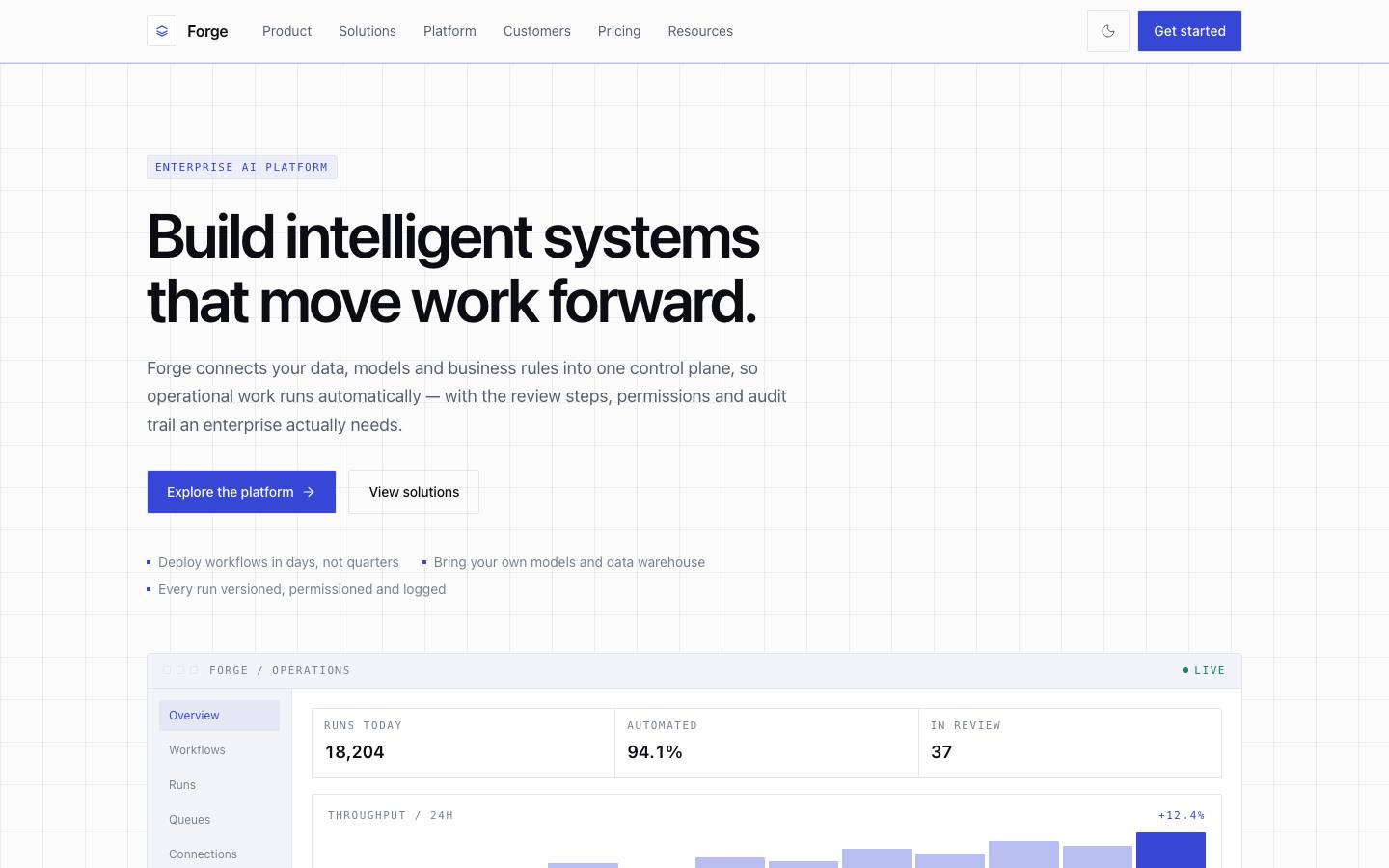
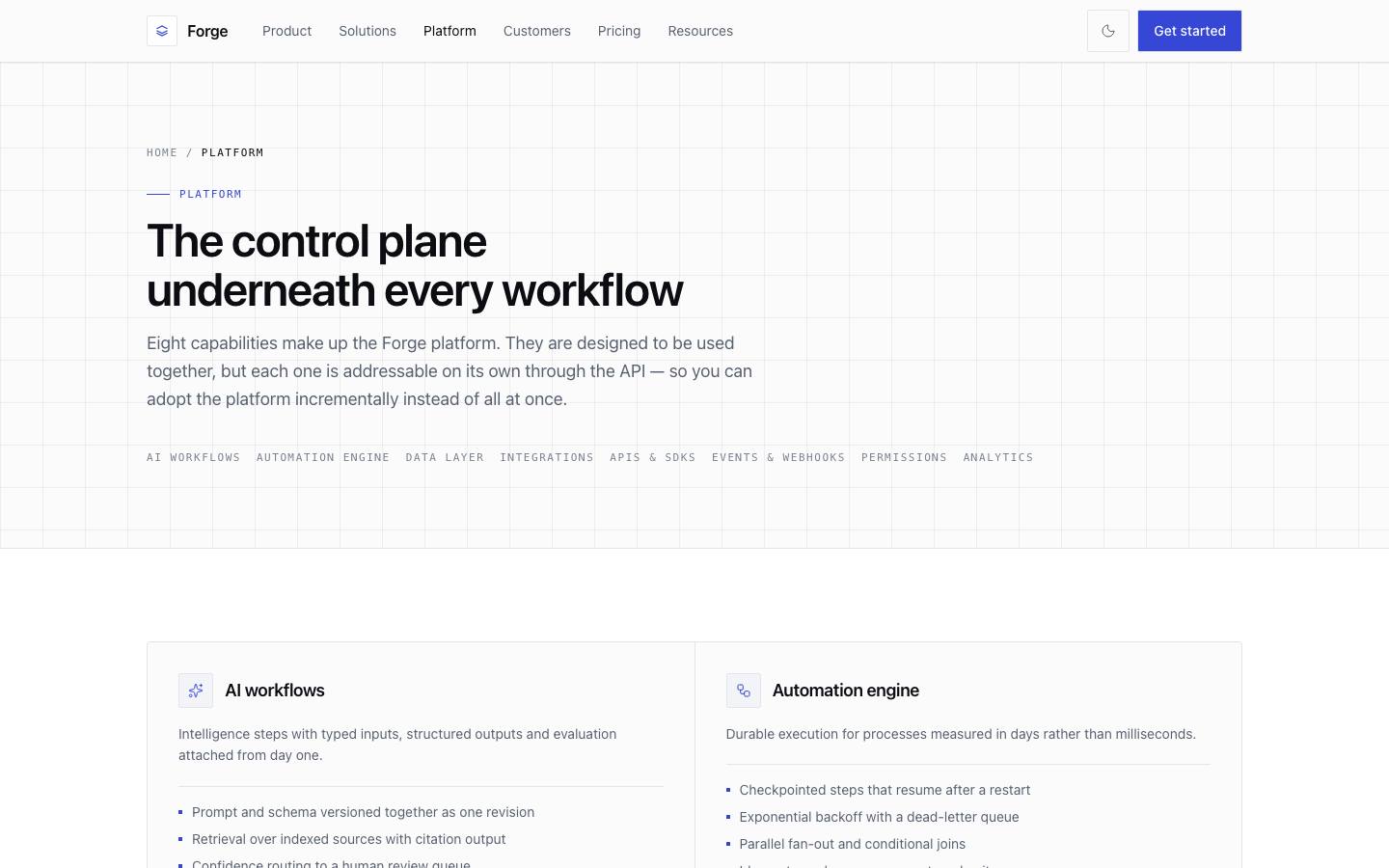
Signal to finished work in five stages, each with its own primitives — the product explains itself before the demo does.
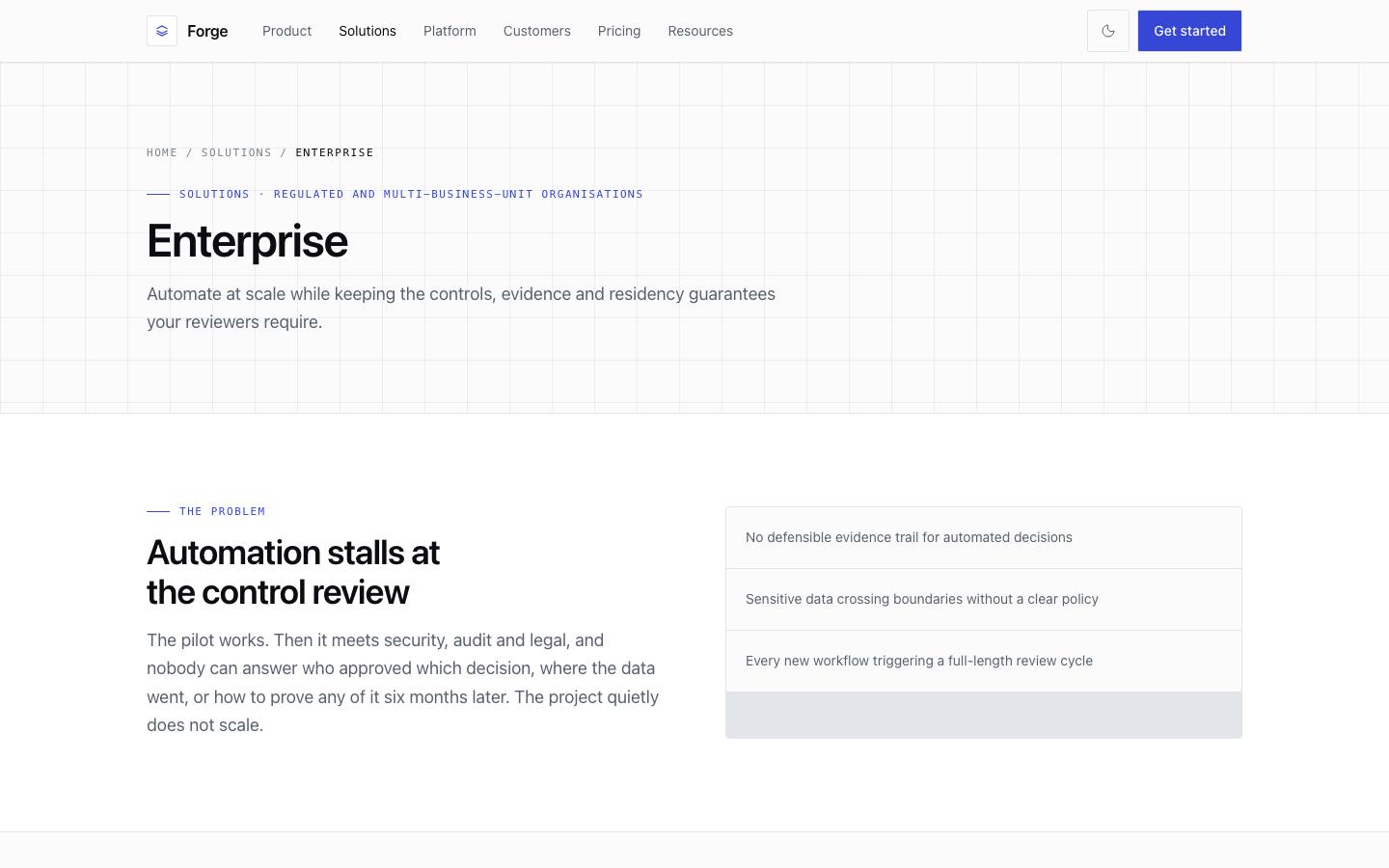
Startup, team and enterprise tracks that change the argument rather than the wallpaper.
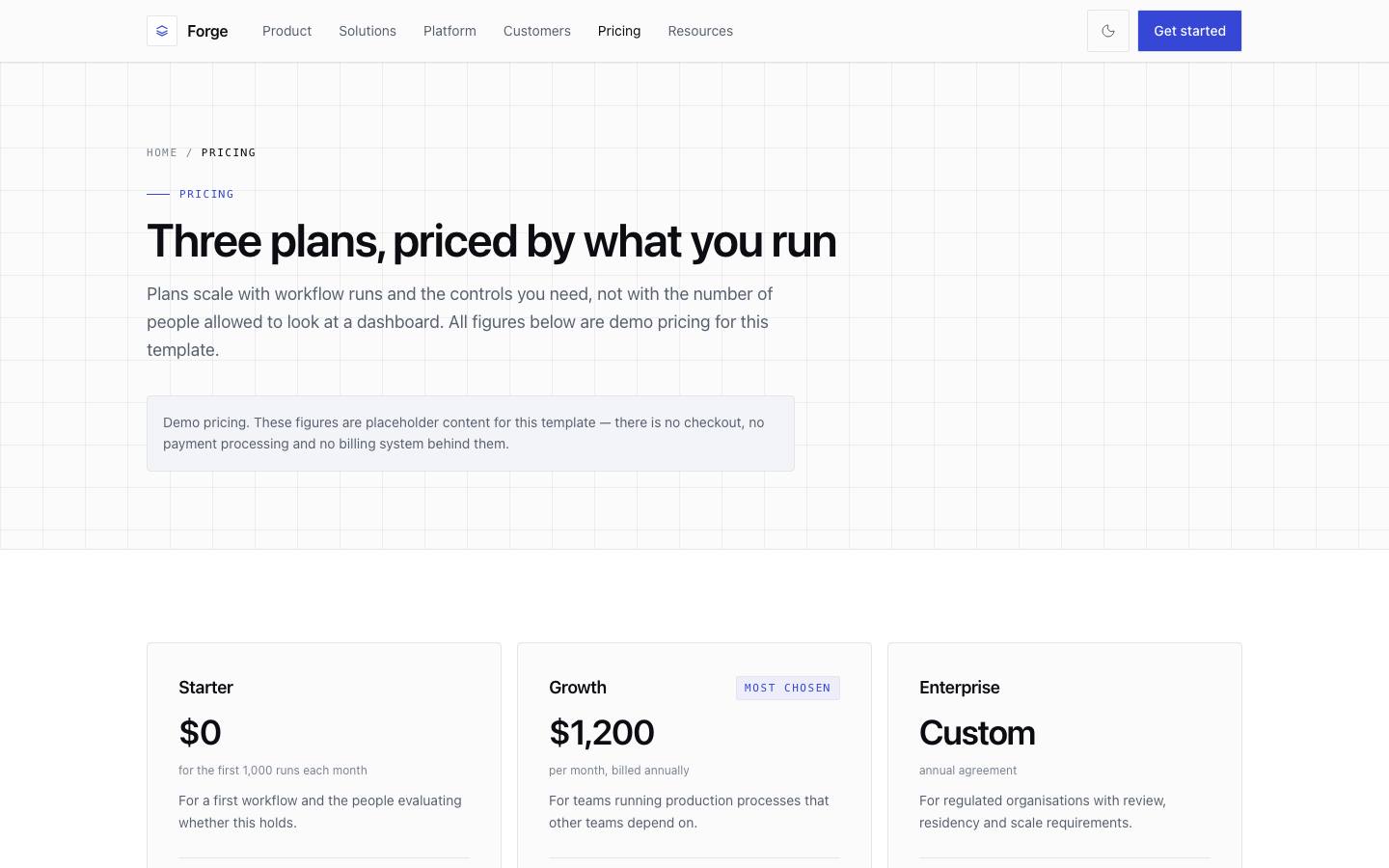
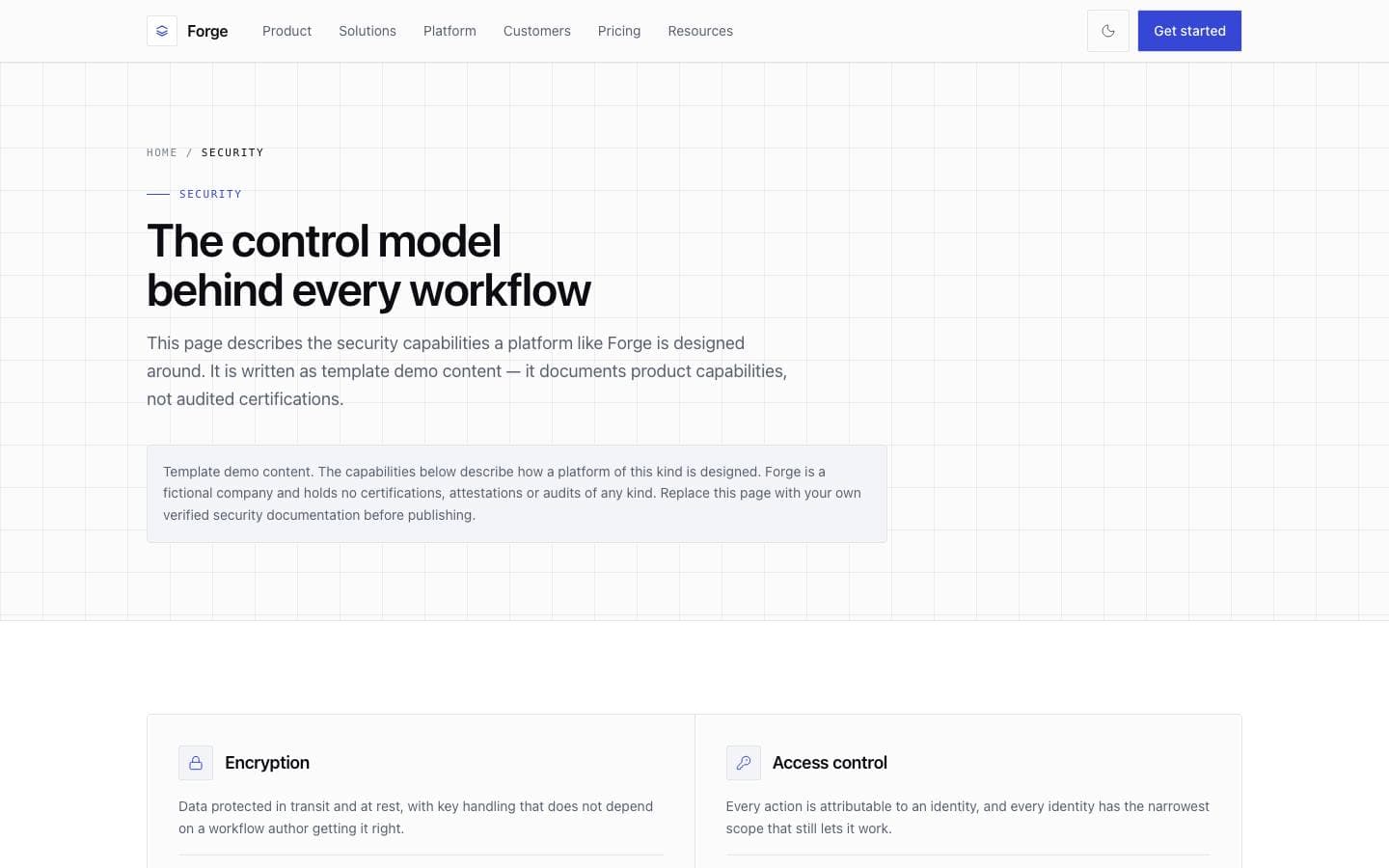
The pages a procurement or security review actually opens — governance, retention and controls.
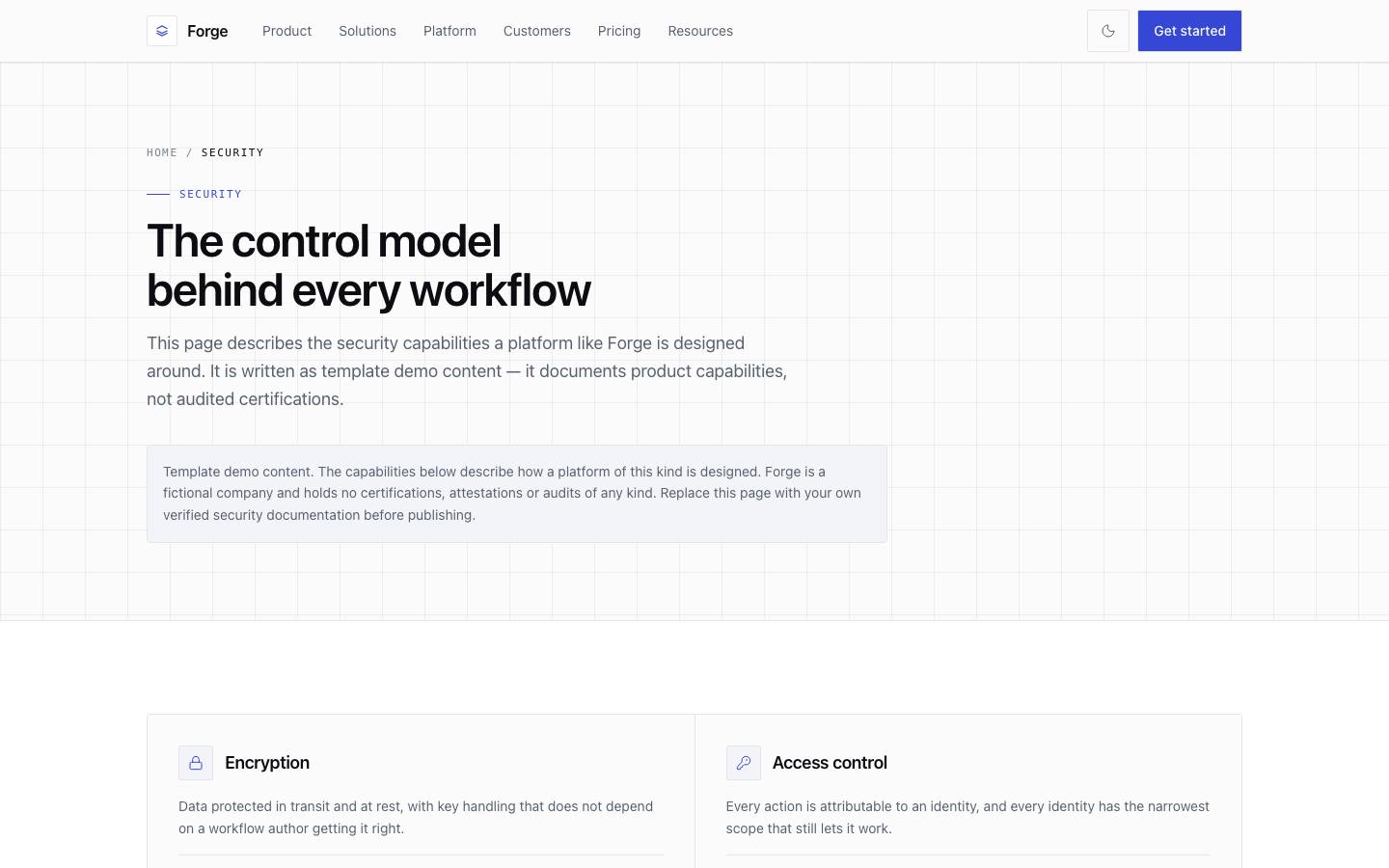
Every screen below is the deployed template, captured from its own live preview.
01
Signal to finished work in five stages, each with its own primitives — the product explains itself before the demo does.
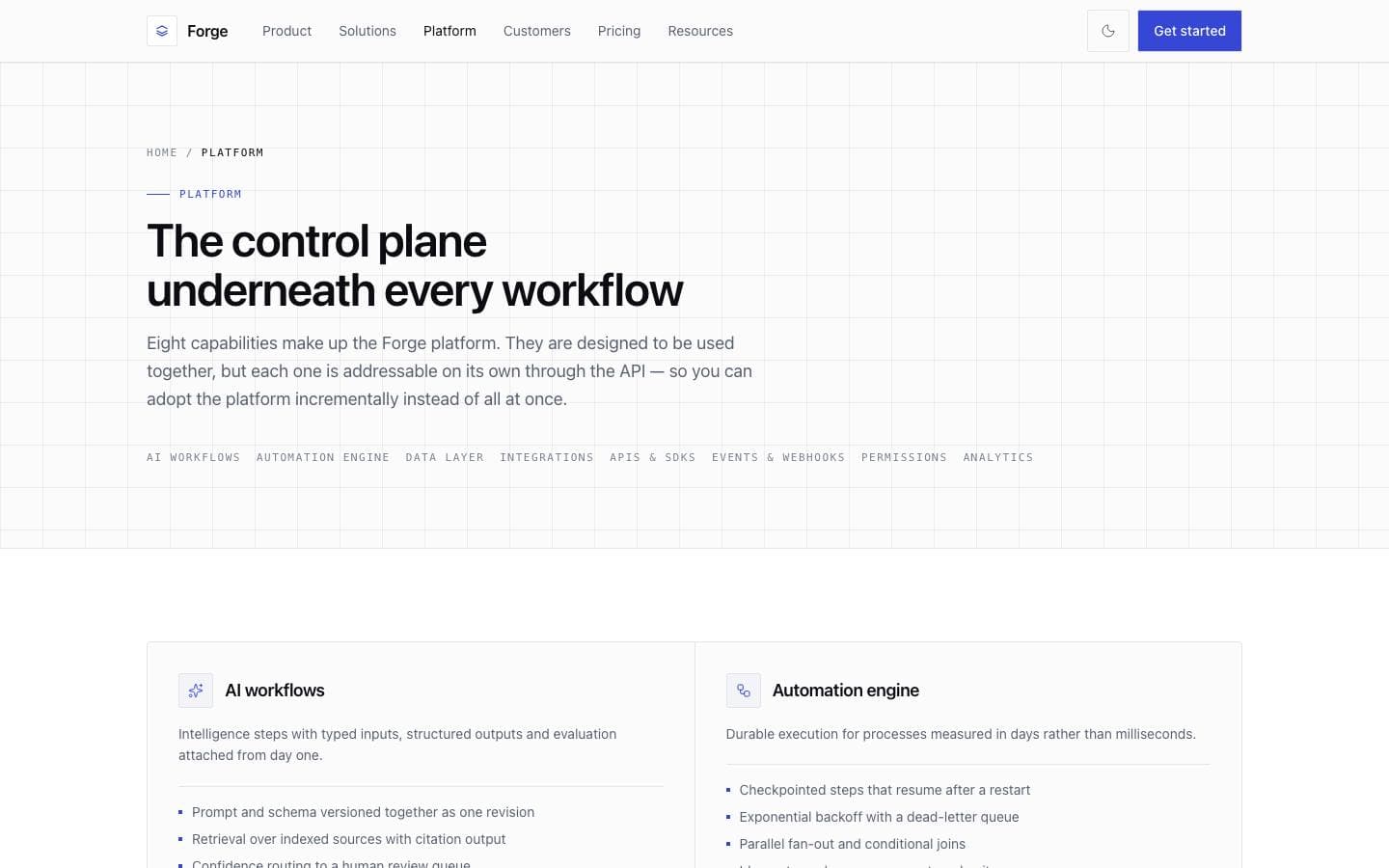
02
Startup, team and enterprise tracks that change the argument rather than the wallpaper.
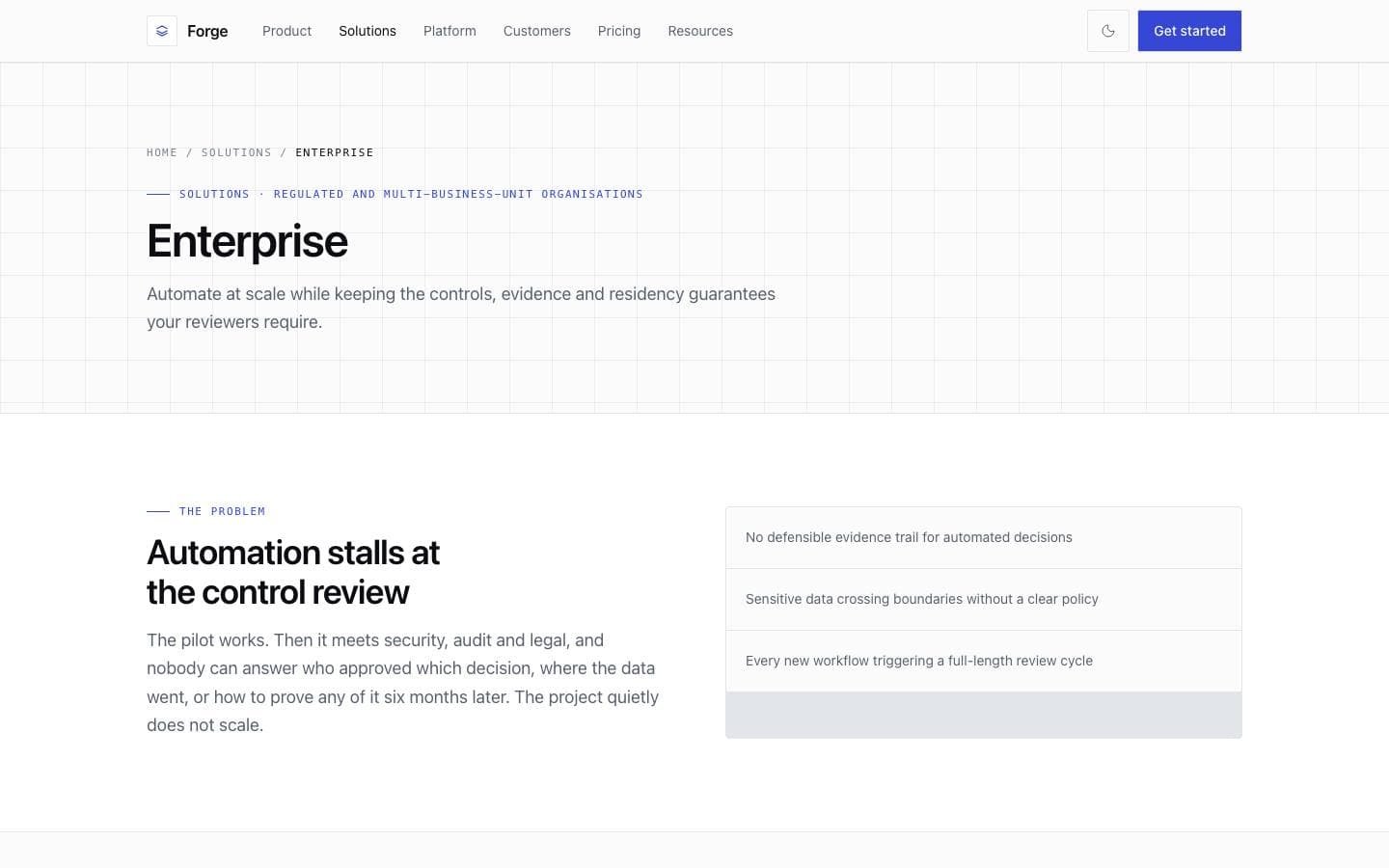
03
The pages a procurement or security review actually opens — governance, retention and controls.
Every line above is read from this product’s own licence and release record rather than written beside it, so it cannot promise something the release does not contain.
The product story is modelled once — inputs, ingest, intelligence, automation, output — and every surface reads from that model rather than restating it. Solutions, pricing and the security page are compositions over the same primitives, so adding a stage changes one array instead of six pages.
Inputs ──▶ Ingest ──▶ Intelligence ──▶ Automation ──▶ Output
                        │              │
                        │              └──▶ Human review
└──▶ Governed data accessforge/
├── app/
│ ├── page.tsx
│ ├── platform/page.tsx
│ ├── solutions/page.tsx
│ ├── pricing/page.tsx
│ ├── security/page.tsx
│ └── resources/page.tsx
├── components/
└── content/The archive contains the full source. There is no installer and no post-install script.
unzip forge.zip
cd forgepnpm installCopy the example file and fill in the variables listed under Environment variables.
cp .env.example .envpnpm devRuns formatting, lint, type-check, tests and a production build.
pnpm check| Variable | Required | Description |
|---|---|---|
DATABASE_URL | Required | PostgreSQL connection string. Use a pooled endpoint in serverless environments.postgresql://user:pass@localhost:5432/app |
NEXT_PUBLIC_APP_URL | Required | Absolute origin of the deployment. Used for canonical URLs and metadata.https://app.example.com |
LOG_LEVEL | Optional | debug | info | warn | error. Defaults to info in production. |
Zero-config. Set the environment variables listed above and connect the repository.
A multi-stage Dockerfile is included, producing a standalone image with no build toolchain.
Builds to a standard Node server. Nothing depends on a platform-specific runtime.
| Technology | Versions | Status |
|---|---|---|
| Next.js | ≥ 15 | Supported |
Initial commercial release
Initial commercial release
Documentation ships with the first release.
No. Forge is a front end: the intelligence layer is presentational, and the copy is written to stay honest about that. Wiring a provider is your integration, and the seams are where you would expect them.
Tiers, limits and the comparison rows are content, not markup. Changing a plan is editing one array.
Curated by us, not inferred — these are the ones that genuinely pair with it.
Other products solving a similar problem.
Products that share a framework with this one.
Documentation and guides that use this template as their example.